


Table of Contents
- Why Journaling Resonates So Deeply in the Philippines
- What Great Journaling Blog Content in the Philippines Looks Like
- Practical Prompts to Kickstart Your Journaling Practice
- Productivity Journaling Tips Built for the Filipino Lifestyle
- Simple Craft Ideas That Make Journaling More Enjoyable
- Grow Your Journaling Practice Beyond the Page
- Start Where You Are, Not Where You Think You Should Be
- Frequently Asked Questions
- The best journaling blog content Philippines readers connect with combines local context, low-pressure prompts, and simple creative ideas anyone can try today.
- You do not need expensive supplies or a perfect setup to start a meaningful journaling practice.
- Scheduling tools like Reclaim AI can help you protect dedicated journaling time even on the most packed Filipino work week.
Finding journaling blog content Philippines readers can actually relate to is harder than it should be. Most of what surfaces online is aimed at a Western audience: elaborate bullet journal spreads, productivity systems built around a quiet 9-to-5 desk job, and morning routines that assume you have an hour of silence before breakfast. That is not most people’s reality here.
A growing wave of Filipino content creators is building something different. Their blogs are rooted in everyday Philippine life: jeepney commutes, family-first priorities, sari-sari store runs, and the quiet comfort of a hot cup of coffee before the rest of the house wakes up. Whether you are a student in Cebu, a remote worker navigating Makati traffic from home, or a creative in Davao looking for a way to process your thoughts, beginner-friendly journaling content exists for you.
This guide covers what makes the best journaling blogs in the Philippines worth your time, complete with practical prompts, productivity tips, and simple craft ideas you can start today.

Why Journaling Resonates So Deeply in the Philippines
Journaling is not a new concept, but it has found fresh relevance in the Philippine context. Research published by the American Psychological Association confirms that expressive writing reduces stress and improves emotional regulation. For Filipinos navigating a uniquely layered mix of family pressure, economic uncertainty, and a deeply relational culture, having an outlet that is entirely your own matters.
Filipino journals also tend to be multilingual by nature. Shifting between Filipino and English (or a regional dialect) in the same entry is not a flaw; it is authenticity. The journaling blog content Philippines creators are producing leans into that identity rather than flattening it for a generic audience. That is what makes it worth reading and worth trying.
What Great Journaling Blog Content in the Philippines Looks Like
Not all journaling content is created equal. For beginners especially, the wrong starting point can make the practice feel like homework instead of a release.
The best journaling blog content Philippines audiences come back to shares a few consistent qualities.
- It is low-pressure. Good beginner content removes the idea that you need a “perfect” journal setup before you can start. A ballpen and a notebook from National Bookstore is a completely legitimate foundation.
- It is locally grounded. A prompt asking “What does a slow Sunday feel like for you?” lands differently when written by someone who grew up watching variety shows on weekend mornings with the family. Cultural context does a lot of work here.
- It is practical. Whether the technique is a five-minute brain dump, a weekly reflection template tied to Filipino seasons (Holy Week, summer, ber months), or a simple habit tracker, the best content helps you build a practice you can sustain.
If you want to take your analog habit somewhere more structured, learning the art of digital bullet journaling is a natural progression. Many Filipino journalers begin on paper and eventually migrate part of their practice online for the flexibility it offers.

Practical Prompts to Kickstart Your Journaling Practice
The single biggest obstacle for beginner journalers is the blank page. These prompts draw directly from popular journaling blog content Philippines themes and are designed to get you writing without overthinking.
For self-reflection:
- What is one thing I am grateful for today that I would normally overlook?
- What would I tell my younger self about the chapter of life I am in right now?
- What does success actually look like for me this week, not on social media, but in real life?
For creative expression:
- If my current season of life had a title, what would it be?
- Describe a place in the Philippines where you feel most like yourself.
- Write about one small everyday moment from today as if it mattered deeply (because it does).
For processing difficult days:
- What emotion am I carrying right now that I have not named yet?
- What is one thing I can set down before tomorrow begins?
These prompts work whether you write three sentences or three pages. Volume is not the goal. Showing up consistently is.
Productivity Journaling Tips Built for the Filipino Lifestyle
Journaling and productivity might seem like separate pursuits, but productivity journaling tips are among the most searched content in Philippine journaling communities for a reason. Writing on paper before you act in the world helps you move with more clarity and less friction.
Here is what consistently works for beginners.
Time-block your journaling session. Even ten minutes a day compounds over time. If your schedule tends to collapse under meetings, errands, and family obligations, a tool like Reclaim AI can automatically schedule protected focus blocks in your calendar. It works around your existing commitments so your journaling time does not get quietly buried every morning.
Try the “3 Things” framework. At the start of each day, write down the three outcomes that would make the day feel complete. At the end of the day, check in honestly. This takes under five minutes but creates a clear sense of intention and closure that most people miss.
Build a weekly review ritual. Every Sunday (or the first quiet moment of your week), spend fifteen minutes writing about what went well, what felt heavy, and what you want to carry forward. Think of it as a personal check-in with yourself, no agenda, just honesty.
The growing conversation around AI in digital journaling is also worth tracking if you want your practice to evolve. Some Filipino bloggers are experimenting with AI-generated prompts and reflection frameworks that make journaling more accessible on low-energy days when the blank page feels especially daunting.
Simple Craft Ideas That Make Journaling More Enjoyable
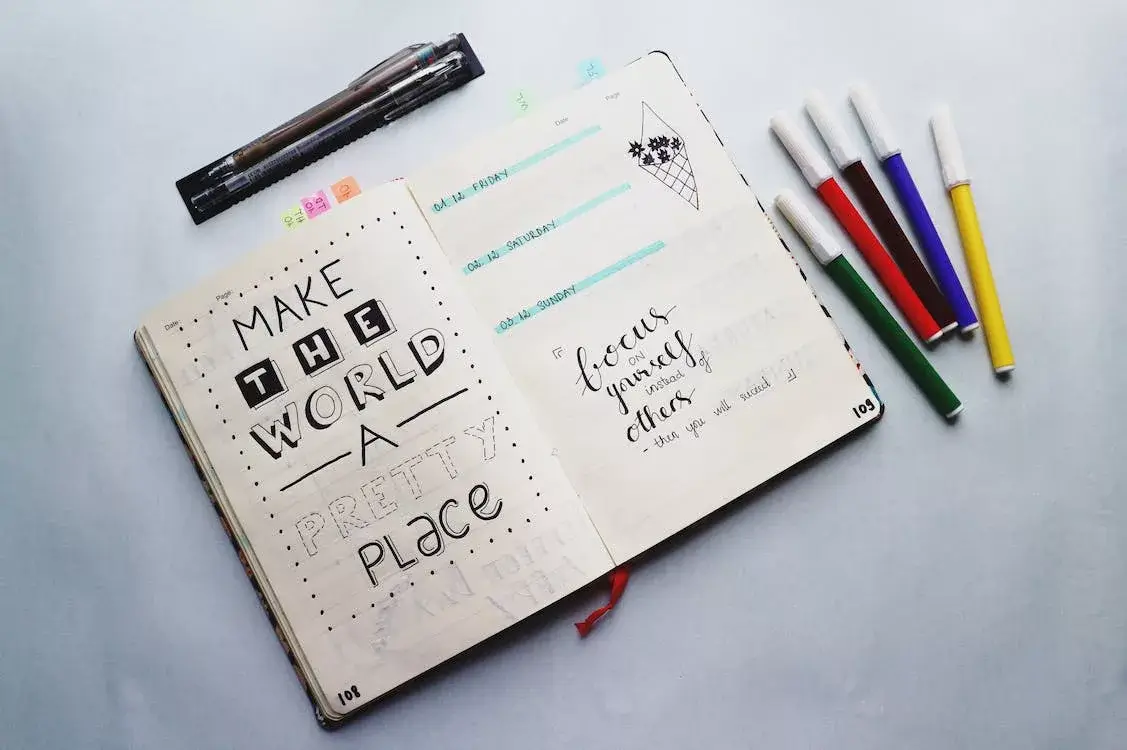
You do not need a Moleskine or a full Mildliner collection. Adding a little personality to your journaling practice can shift it from feeling like a task to feeling like a ritual.
Try envelope inserts. Tape a small envelope to the inside back cover of your notebook to hold ticket stubs, Polaroid prints, or receipts from meals that meant something. It turns your journal into a small time capsule without any extra effort.
Make collage pages. Cut images from old magazines or printed photos and paste them around your entries. Filipino journalers often layer local imagery, sampaguita illustrations, retro Philippine travel prints, provincial landscapes, with personal photos to create spreads that feel genuinely theirs.
Color-code with pens you already own. Assign a color to different areas of your life. Blue for work thoughts, red for feelings, green for gratitude. No new supplies required. This system works with whatever pens are already in your bag right now.
These ideas reflect the kind of accessible, doable journaling blog content Philippines beginners return to. Nothing here requires a shopping trip. Everything here requires only that you begin.
Grow Your Journaling Practice Beyond the Page
Once you find a rhythm, you might want to connect with others or take your practice in a new direction. Filipino journaling communities are active on Facebook and Telegram, where members swap prompts, share journal spreads, and build accountability with each other in a low-pressure environment.
If you are building your own journaling content or blog, exploring digital bullet journaling as a content format opens up real creative and community-building possibilities. It lets you organize your reflections, track habits visually, and publish layouts that actually grow an audience over time.
For those ready to build an email list around their journaling content, keeping your subscriber list clean is non-negotiable for good deliverability. Bouncer is an email verification tool that helps you validate addresses before they enter your list, so your newsletters reach the readers who actually signed up to hear from you.

Start Where You Are, Not Where You Think You Should Be
The best journaling blog content the Philippines has produced does not ask you to overhaul your life before you pick up a pen. It invites you to pay attention to the one you already have, one page at a time.
Start small. One prompt. A five-minute freewrite. A collage made from a torn page of a magazine sitting on your kitchen table. None of it needs to look good. It just needs to be honest.
The practice builds quietly. One entry becomes a habit. A habit becomes a record. Over months and years, that record becomes something surprisingly valuable: evidence that you were here, that you paid attention, and that your inner life was worth writing down.
Ready to Build a Journaling Practice That Actually Sticks?
Our store has beginner-friendly journaling templates, guided prompt packs, and creative tools designed specifically for Filipino journalers who want structure without rigidity.
Frequently Asked Questions
What kind of journaling blog content works best for Filipino beginners?
Beginner-friendly journaling content in the Philippines tends to lead with simple prompts, locally grounded themes, and low-cost creative ideas that fit into a real Filipino schedule. Multilingual, culturally specific content tends to resonate most with local readers.
Do I need to buy special supplies before I start journaling?
No. A ballpen and any available notebook is enough to begin. Most Philippine journaling blogs emphasize that consistency and honesty matter far more than aesthetics, especially in the first few months of building the habit.
How do I protect time for journaling when my days are unpredictable?
Even ten minutes a day is a meaningful start. Using a tool like Reclaim AI to automatically block focus time in your calendar can help you guard that window before the rest of your day fills it in.

Maria is a digital marketing professional, specializing in content marketing and SEO. She's a neurodivergent who strives to raise awareness, and overcome the stigma that envelopes around mental health.





No Comment! Be the first one.