


Table of Contents
- What Is Gentle Productivity for Bloggers With ADHD?
- Step 1: Name the Blogging Struggle You’re Actually Facing
- Step 2: Build Your Blogging System Around Your Energy
- Step 3: Automate the Repetitive Parts of Content Creation
- Step 4: Protect the Line Between Writing and Everything Else
- Step 5: Track Your Progress Without Turning It Into Pressure
- Gentle Productivity Mistakes That Quietly Undo Your Progress
- Consistency Over Perfection: Your Next Blogging Season
- Frequently Asked Questions
- Gentle productivity replaces rigid content calendars with routines that bend around your real energy and focus.
- Naming your specific blogging struggle is the first move toward solving it without burning out.
- Small, automated systems protect your consistency far better than motivation or willpower alone.
Gentle productivity is the antidote to a blogging cycle that will feel painfully familiar to a lot of writers: a manic weekend of drafting five posts, followed by two silent months. If you’re an ADHD woman trying to build a blog, a portfolio, or a business around your writing, you’ve probably lived this loop more than once. It isn’t a discipline problem. It’s a systems problem, and gentle productivity is the fix.
This approach isn’t about doing less for the sake of doing less. It’s about matching your workflow to how your brain actually operates, so consistency stops depending on a good mood or a burst of willpower. Below is a step by step way to apply gentle productivity to the specific content blogging challenges that tend to derail ADHD writers: starting, finishing, publishing, and staying visible without wearing yourself out.
What Is Gentle Productivity for Bloggers With ADHD?
Gentle productivity is a way of working that prioritizes sustainable output over maximum output. Instead of asking “how much can I produce this week,” it asks “what pace can I actually maintain for the next six months.”
For neurodivergent creatives, this distinction matters more than it sounds. Traditional productivity advice assumes a stable, predictable relationship with focus and motivation. ADHD brains rarely work that way. Some days a blog post pours out in forty minutes. Other days, opening the document feels impossible. Gentle productivity builds a system that accounts for both, rather than treating the second scenario as a personal failure.
In practice, this means shorter working sessions, built-in recovery time, and content systems that don’t collapse the moment life gets chaotic. It’s less about hustle and more about sustainable productivity you can return to again and again, even after a rough week.

Step 1: Name the Blogging Struggle You’re Actually Facing
Before fixing anything, get specific about where the breakdown happens. “I’m inconsistent” is too vague to solve. Most blogging struggles fall into one of three categories: starting, finishing, or publishing.
Starting struggles usually show up as staring at a blank document for an hour, opening five tabs of “research,” or rewriting the same intro three times. This is frequently tied to executive dysfunction in ADHD, where the gap between knowing what to do and actually starting the task feels enormous, even when the task itself isn’t hard. Naming it this way removes the shame, because it reframes the problem as neurological rather than a character flaw.
Finishing struggles look like a folder of half-written drafts that never see daylight, usually because the idea got boring the moment the initial dopamine hit wore off. Publishing struggles show up as a finished post sitting untouched for weeks because hitting “publish” triggers a wave of second-guessing.
Once you know which of these productivity struggles you’re actually dealing with, you can pick a targeted fix instead of a generic one. A starting problem needs a lower-friction entry point. A finishing problem needs shorter deadlines and smaller scopes. A publishing problem usually needs an external accountability check, not more editing time.

Step 2: Build Your Blogging System Around Your Energy
Gentle productivity works because it treats energy, not the clock, as the scarce resource. Instead of blocking “9 to 11am, write blog post,” track which parts of your day tend to bring clearer focus, and protect that window for writing rather than for email or admin work.
This is the foundation of solid ADHD productivity systems for creatives: batching similar tasks together (all outlining in one sitting, all drafting in another) so your brain isn’t constantly switching gears. Switching between strategy, writing, and editing in the same hour is exhausting for anyone, and it’s especially costly for an ADHD brain managing limited working memory.
Reclaim AI is worth a look here if calendar chaos is part of your struggle. It auto-schedules flexible tasks like “draft blog post” around your fixed commitments and adjusts the plan when meetings shift, which takes the manual replanning off your plate entirely. For a writer who blogs alongside client work, that kind of adaptive scheduling does a lot of the mental load-bearing that a static calendar simply can’t.
Your blogging system should also connect to the bigger picture. A blog rarely functions well in isolation; it’s usually one piece of a broader digital marketing strategy that includes email, social, and search. Treating your blog as a standalone chore, disconnected from that strategy, is part of why it’s easy to deprioritize when things get busy.

Step 3: Automate the Repetitive Parts of Content Creation
Willpower is a poor engine for repetitive tasks. If you’re manually rewriting the same outline structure, drafting the same type of social caption, or reformatting the same meta description every single week, that’s friction you can remove instead of muscle through.
Tools like Dify let you build simple, no-code AI workflows for the repetitive parts of your content process: turning a rough outline into a structured draft skeleton, generating first-pass meta descriptions, or repurposing a finished post into a few social captions. The goal isn’t to hand off your voice or your ideas. It’s to stop spending your limited executive function on tasks that don’t actually require it, so more of that energy is left for the writing that does.
This is also where a clear personal portfolio blog framework earns its keep. When every post follows a repeatable structure (intro, key sections, takeaways, CTA), you’re not reinventing the wheel each time you sit down to write, which lowers the activation energy needed to start.
Step 4: Protect the Line Between Writing and Everything Else
A lot of blogging burnout isn’t really about the writing. It’s about never fully switching off from the pressure to be visible, helpful, and “on” across every platform at once.
This is closely tied to creative masking, the habit of performing polish and consistency online even when your actual capacity that week looks nothing like it. Masking is exhausting precisely because it’s invisible work layered on top of the visible work of writing a post. Recognizing when you’re doing it is often the first step toward building genuine work-life balance instead of a performance of it.
Set a real stopping point for content work, not just a soft intention to “wrap up soon.” Decide in advance when the blog closes for the day, and treat that boundary the same way you’d treat a client deadline: as something other people are also relying on you to hold, even if that “other person” is just future you.
Step 5: Track Your Progress Without Turning It Into Pressure
Gentle productivity still needs feedback, just not the anxious, refresh-the-analytics-every-hour kind. Checking your numbers obsessively doesn’t make the content better; it just adds another source of low-grade stress to an already full plate.
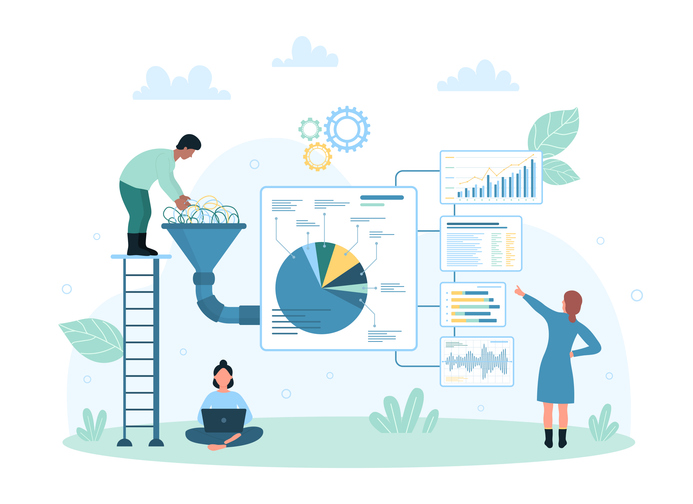
Pick one or two metrics that actually matter (search visibility and reader engagement are usually enough) and check them on a set schedule, like once every two weeks. Rank Prompt is a useful option if you want to see how your content is showing up across AI search tools and answer engines without manually testing the same queries in ChatGPT, Perplexity, and Google over and over. One dashboard, one scheduled check, done.
It also helps to think about how a reader actually experiences your blog from first click to final scroll. Mapping that path, often called user journey mapping, can reveal simple structural fixes (a missing internal link, a confusing heading) that do more for performance than another round of manual keyword tweaking ever would.

Gentle Productivity Mistakes That Quietly Undo Your Progress
Even the best blogging tips for writers can slide back into old patterns without warning. Watch for these:
- Treating “gentle” as “no structure.” Gentle productivity still needs a rhythm; it’s just a flexible one, not a rigid one.
- Adding tools faster than you adopt habits. A new app won’t fix a system that hasn’t been tested for a few weeks first.
- Measuring yourself against high-output creators. Someone else’s publishing pace was built for their brain and their life, not yours.
- Skipping recovery after a productive stretch. A good week isn’t permission to skip rest; it’s usually the reason rest is overdue.
These slip-ups are common precisely because old productivity habits are sticky. Noticing them early keeps your system gentle instead of letting it quietly turn back into the same all-or-nothing cycle you were trying to leave behind.
Consistency Over Perfection: Your Next Blogging Season
Gentle productivity isn’t a one-time fix; it’s a way of relating to your work that you’ll keep adjusting as your life and energy shift. Some months will allow for two posts a week. Others will only have room for one, published a little later than planned, and that’s still progress.
The bloggers who last aren’t the ones who never struggle. They’re the ones who built a system flexible enough to hold the struggle without falling apart. Give yourself permission to write at the pace that’s actually sustainable, and trust that consistency, even a modest, imperfect kind, will outperform any short burst of manic output over the long run.
Ready to Take the Repetitive Work Off Your Plate?
Gentle productivity works best when the parts of blogging that drain you most, outlining, first drafts, repurposing a post into social captions, run on a system instead of your willpower. Dify lets you build those workflows without writing a single line of code, so more of your limited energy stays with the writing that actually needs you.
Frequently Asked Questions
What is gentle productivity for bloggers?
Gentle productivity is an approach to content creation that prioritizes a sustainable, flexible pace over maximizing output, especially useful for ADHD writers managing inconsistent energy and focus.
How do I stay consistent with blogging when I have ADHD?
Build your system around your actual energy patterns instead of a fixed schedule, automate repetitive tasks, and track progress on a set schedule rather than constantly.
Is gentle productivity the same as being unproductive?
No. Gentle productivity still involves structure and output; it simply removes the rigid, willpower-dependent expectations that make burnout more likely for neurodivergent creatives.

Maria is a digital marketing professional, specializing in content marketing and SEO. She's a neurodivergent who strives to raise awareness, and overcome the stigma that envelopes around mental health.






No Comment! Be the first one.