



Table of Contents
- Top Sunsama Features: Workflow Automation as Your Digital Co-Pilot
- Integrations: Connecting Your Scattered Tools
- Prioritization Framework: Your Personal Task Filter
- Daily Planning Ritual: Morning Coffee for Your Mind
- Time Blocking: Orchestrating Your Day
- How These Features Work Together
- Getting Started Without Overwhelm
- Frequently Asked Questions
- Workflow automation and integrations reduce decision fatigue and context switching costs by handling repetitive tasks and consolidating scattered information into one workspace.
- The prioritization framework combined with daily planning rituals helps ADHD brains identify high-impact tasks and create realistic schedules that match natural energy patterns.
- Time blocking through timeboxing provides visual structure that prevents overcommitment while maintaining the flexibility ADHD brains need to adapt throughout the day.
Discovering the top Sunsama features can be transformative when you consider that adults with ADHD lose an average of 22 days of productivity per year when untreated, according to the World Health Organization.
The problem isn’t lack of effort. The problem is that most productivity tools assume your brain works in straight lines. Sunsama takes a different approach.
We’ve spent months testing Sunsama’s lesser-known features specifically for ADHD productivity challenges. These five capabilities address the real issues: decision fatigue, context switching costs, and the mental load of keeping everything organized.
Top Sunsama Features: Workflow Automation as Your Digital Co-Pilot
Research from the University of California, Irvine found that it takes an average of 23 minutes and 15 seconds to refocus on a task after being interrupted. For ADHD brains, that recovery time compounds throughout the day.
Sunsama’s workflow automation handles the repetitive decisions that drain your mental energy.
The automation features work quietly in the background. Tasks automatically move to the right day. Status updates happen without you remembering to do them. Routine tasks appear when you need them.
Here’s what automation actually does:
- Smart task prioritization learns your patterns. The system notices which tasks you complete first and adjusts accordingly. You stop wasting energy deciding what to do next.
- Automated status updates keep your team informed without breaking your focus. When you complete a task, the relevant people know. You don’t context switch to send updates.
- Routine task management creates consistency without constant mental effort. Your weekly review appears every Monday. Your end-of-day shutdown ritual triggers automatically.
- Project progress tracking happens in the background. You see where things stand without manually checking multiple tools.
The key insight: automation reduces the number of decisions you make each day. Research from the American Psychological Association shows that multitasking can hurt your productivity by 40%. Automation eliminates many of those switching costs.
Integrations: Connecting Your Scattered Tools
ADHD individuals often struggle with information scattered across multiple platforms. Email in one place, tasks in another, calendar somewhere else. Each tool switch costs mental energy.
Sunsama’s integrations create a single workspace that pulls everything together, making it particularly valuable for sunsama for adhd students juggling classes, assignments, and deadlines.
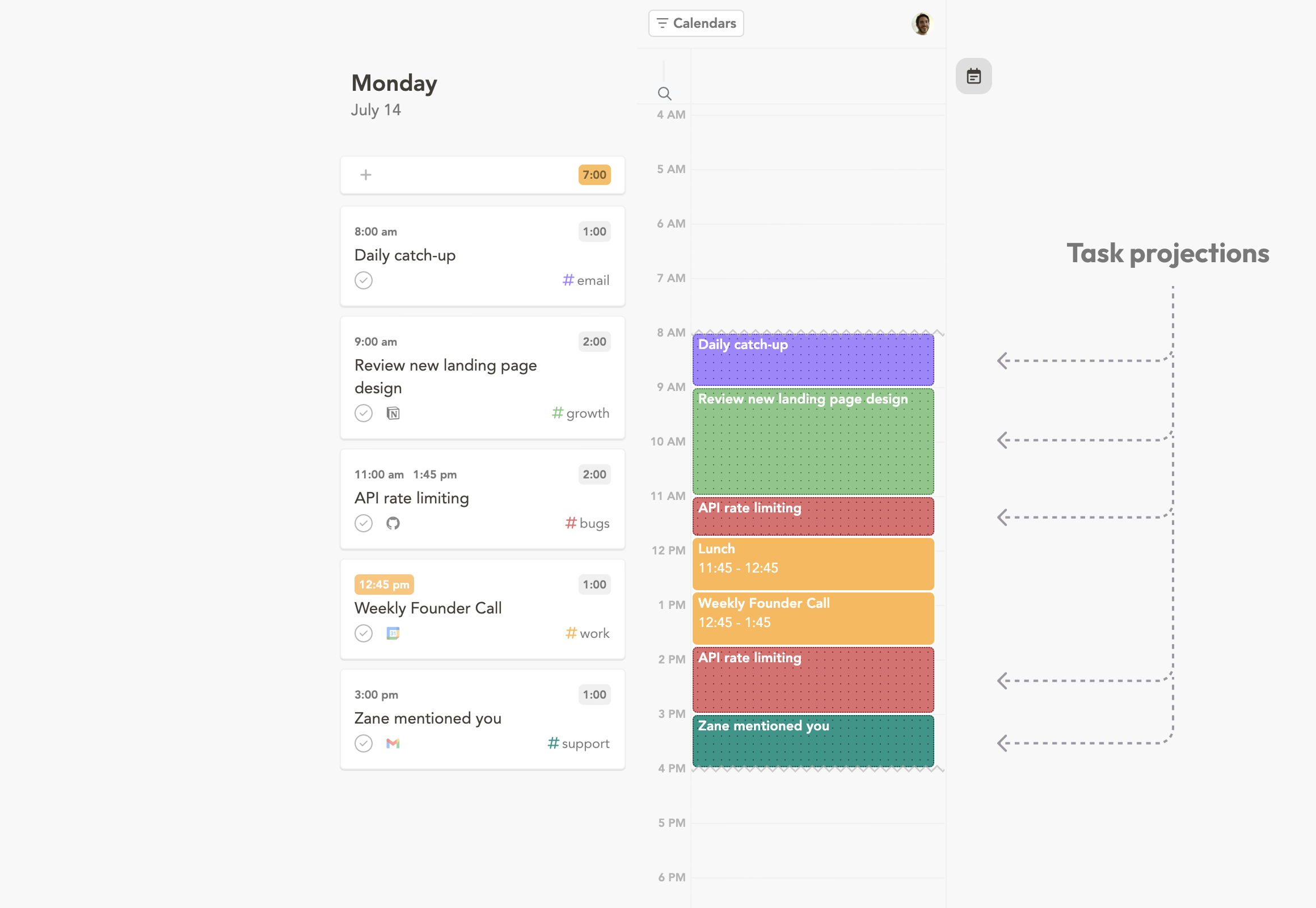
- Email management integration brings messages directly into your daily plan. You see emails alongside tasks and calendar events. The context stays intact. You respond to important messages without opening your inbox and falling into an email rabbit hole.
- Calendar synchronization shows your meetings and tasks in one view. You know exactly how much time you have between commitments. The visual representation helps you plan realistically instead of overcommitting.
- Project management flow connects tools like Asana, Trello, and Jira. Tasks from these platforms appear in your daily plan. You work from one interface instead of jumping between tabs.
Prioritization Framework: Your Personal Task Filter
Executive function deficits provide ADHD tips for adults who face occupational challenges, affecting 60-70% of affected individuals. Prioritization becomes particularly difficult when everything feels urgent.
Sunsama’s prioritization framework helps you identify what actually matters.
The system uses a simple approach. You assign priority levels during your morning planning. High-impact tasks get flagged. Lower-priority items move to a backlog. The visual distinction helps your brain process what needs attention first.
The framework works in three steps:
- Morning review shows you everything on your plate. You see tasks, meetings, and commitments in one view. The complete picture helps you make better decisions about what to tackle.
- Priority assignment happens through drag-and-drop. You physically move high-priority tasks to the top of your list. The kinesthetic action reinforces the decision.
- Flexible adaptation allows you to adjust throughout the day. Energy levels change. Unexpected tasks appear. You can reprioritize without guilt or system friction.
Research from the University of Southern California found that individuals who used time blocking increased their overall productivity by 50%. The prioritization framework enhances time blocking by ensuring you block time for the right tasks.
The evening reflection feature shows what you completed and what moved forward. This feedback loop helps you understand your actual capacity instead of constantly overestimating what you can accomplish.
Daily Planning Ritual: Morning Coffee for Your Mind
Adults with ADHD report 30% to 50% higher levels of job stress compared to their peers, with coffee rituals for ADHD often providing the structured comfort needed to start the day. Much of that stress comes from feeling unprepared and reactive.
Sunsama’s daily planning ritual creates a structured start to your day.
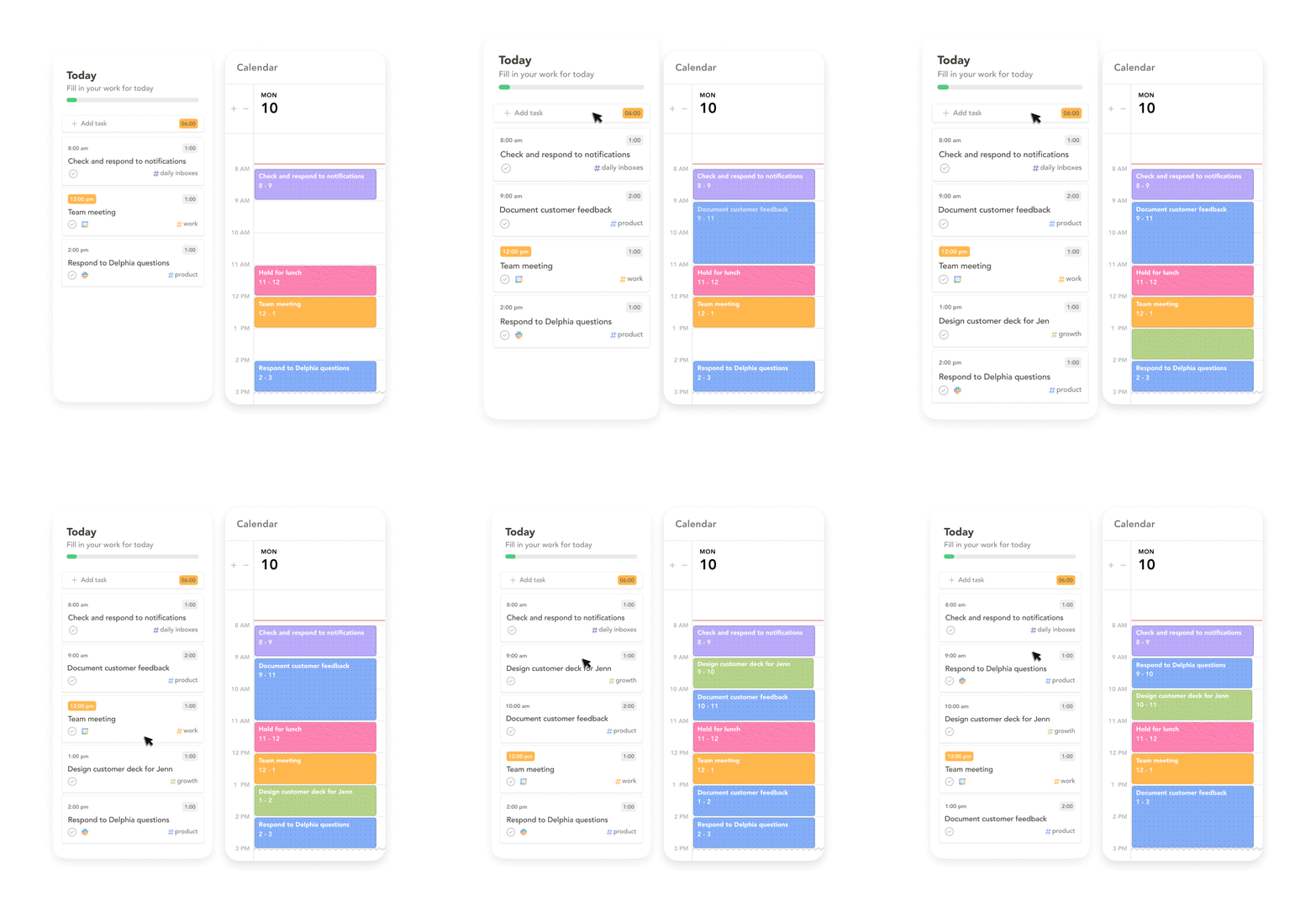
The ritual takes 10-15 minutes each morning. You review what’s on your calendar. You look at tasks from various projects. You decide what makes it onto today’s list.
The planning process includes:
Calendar review shows your meetings and commitments. You see the time you actually have available for focused work. This prevents the common ADHD pattern of planning eight hours of tasks for a day with six hours of meetings.
Task organization brings items from your backlog into today’s plan. You choose what to work on instead of letting urgency decide. The intentional selection reduces reactive behavior.
Time blocking assigns specific hours to specific tasks. You create a realistic schedule that accounts for your energy patterns. Morning hours might go to difficult work. Afternoon slots might handle administrative tasks.
The ritual addresses a specific challenge: the heavy initial investment that creates problems for ADHD individuals. By making planning a daily habit, the investment becomes manageable. You spend 15 minutes each morning instead of hours trying to organize an overwhelming backlog.
The structure provides consistency without rigidity. You follow the same process each day, but the content changes based on your current priorities and energy levels.
Time Blocking: Orchestrating Your Day
Distractibility is among the most prevalent workplace challenges, with 63% of employees with ADHD stating that difficulty ignoring distractions significantly impacts their productivity.
Time blocking in Sunsama addresses this challenge directly.
The approach differs from traditional calendar blocking through timeboxing, a method where you don’t just schedule tasks but create a visual representation of your ideal day. Each task gets a specific time slot. The visual layout helps your ADHD brain understand what’s happening when.
Time blocking works through several mechanisms:
- Visual time representation shows your day as blocks of color. Different projects get different colors. You see at a glance how your time distributes across priorities. The visual nature works well for ADHD brains that process spatial information effectively.
- Realistic time estimates force you to confront how long tasks actually take. You can’t fit 12 hours of work into an 8-hour day when you see the blocks. This prevents the optimistic planning that leads to constant failure and frustration.
- Buffer time between tasks accounts for transitions. You build in 10-15 minutes between major tasks. This buffer handles the context switching that ADHD brains find particularly costly.
Research shows that focusing on one task at a time can make you up to 80% more productive than splitting your attention across multiple tasks. Time blocking enforces this single-tasking approach by giving each task dedicated space.
The drag-and-drop interface makes adjustments easy. When something takes longer than expected, you move other blocks around. The flexibility prevents the rigid scheduling that ADHD brains rebel against.
Implementation Strategies that Work:
- Start with your hardest task first. Research on task batching shows that tackling difficult work during peak energy hours eliminates daily procrastination. Block your first 90 minutes for your most important task.
- Group similar tasks together. Answer all emails in one block. Make all phone calls in another. Task batching limits context switching and saves mental energy.
- Schedule breaks explicitly. ADHD brains need regular movement and mental rest. Block 10 minutes every 90 minutes for a walk or stretch. The scheduled breaks prevent the guilt that comes from taking them spontaneously.
- Use the workload view to see your week at a glance. This feature saves two hours weekly per employee according to research. You spot overcommitted days before they arrive and adjust accordingly.
How These Features Work Together
The real power comes from combining these features into a cohesive system.
Your morning starts with the daily planning ritual. You review your calendar and tasks. The prioritization framework helps you identify what matters most—essential for addressing freelancing struggles where self-direction is critical. You use time blocking to create a realistic schedule.
Throughout the day, workflow automation handles routine decisions. Integrations keep information from scattered tools visible in one place. You work from your time-blocked schedule instead of reacting to whatever grabs your attention.
The evening reflection shows what you accomplished. You see patterns in your productivity. You learn which time blocks work best for which types of tasks. This feedback improves your planning over time.
The system addresses the core ADHD productivity challenges:
Decision fatigue decreases because automation handles routine choices. Context switching costs drop because integrations reduce tool jumping. Mental load lightens because you trust your system to remember everything.
The structure provides consistency. The flexibility allows adaptation. You get the benefits of both without the drawbacks of either.
Getting Started Without Overwhelm
The biggest mistake is trying to implement everything at once. That heavy initial investment creates problems for ADHD individuals.
Start with one feature. We recommend beginning with the daily planning ritual. Spend 10 minutes each morning for one week. Just review your calendar and choose three tasks for the day. Having an ADHD support pet nearby during this ritual can provide calming companionship that enhances focus.
After the ritual becomes comfortable, add time blocking. Take your three tasks and assign them specific time slots. Work from that schedule for another week.
Then introduce integrations. Connect your email first. See how it feels to handle messages from within your daily plan. Add other tools gradually.
The prioritization framework and workflow automation can wait until you’re comfortable with the basics. These features enhance a system that’s already working. They don’t need to be part of your initial setup.
Remember that productivity isn’t about pushing harder. It’s about creating systems that work with your brain instead of against it. These Sunsama features provide structure while maintaining the flexibility that ADHD brains need to thrive.
The research backs this up. Time blocking saves 20 hours per week. Automation reduces cognitive load. Integrations eliminate context switching costs. The tools work. The question is whether you’ll give them a chance to prove it.
Start small. Build gradually. Trust the process. Your ADHD brain will thank you.
Frequently Asked Questions
Is Sunsama better than other ADHD productivity tools?
Sunsama vs. BeforeSunset AI comes down to personal preference, but Sunsama’s integration ecosystem and visual time blocking tend to work exceptionally well for ADHD brains that need both structure and flexibility.
How long does it take to see results with Sunsama?
Most users report noticeable improvements within 1-2 weeks of consistent daily planning, with full benefits emerging after 3-4 weeks once habits solidify.
Can I use Sunsama if I already have other productivity tools?
Absolutely! Sunsama’s strength lies in its integrations with existing tools like Gmail, Slack, Asana, and Trello, creating a unified workspace without forcing you to abandon what already works.
Is Sunsama too complicated for someone with ADHD?
The learning curve is gentle when you start with just the daily planning ritual and gradually add features, making it more sustainable than trying to master everything at once.
Does Sunsama work for both personal and professional tasks?
Yes, Sunsama handles both seamlessly in one interface, which is particularly helpful for ADHD individuals who struggle with context switching between separate personal and work systems.

Maria is an accomplished digital marketing professional, specializing in content marketing and SEO. She's a neurodivergent who strives to raise awareness, and overcome the stigma that envelopes around mental health.





No Comment! Be the first one.