


Table of Contents
- Sunsama is better for structured, ritual-based daily planning with deep project management integrations.
- BeforeSunset AI builds your daily schedule automatically using AI, making it the lower-effort, lower-cost option.
- BeforeSunset AI’s free plan removes the barrier to entry, making it the more accessible starting point for most users.
Choosing between Sunsama vs BeforeSunset AI is one of those decisions that sounds small but can genuinely reshape how your workdays feel. AI productivity tools have gotten seriously good in recent years, and both Sunsama and
BeforeSunset AI are proof of that. But they take very different paths to reach the same destination: a calmer, more focused workday.
If you’ve been toggling between browser tabs trying to figure out which one is worth your money and your time, you’re in the right place. This comparison breaks it all down without the fluff.
What These Tools Are Built For
Both tools want to solve the same core problem: most people are bad at planning their days, and even worse at sticking to those plans. But the way each approaches that problem says a lot about who they’re designed for.
Sunsama was built around the idea of mindful productivity. It asks you to sit with your tasks, time-block them intentionally, and reflect at the end of the day. It integrates with tools like Asana, Trello, Notion, Slack, and Google Calendar, pulling tasks from wherever you already work. The daily planning ritual is a real feature here, not just a gimmick. If you’re someone who finds structure comforting and thrives within clear routines, Sunsama was built with you in mind.
BeforeSunset AI takes a more automated approach. It uses AI to analyze your to-do list and schedule, then builds your day for you. Instead of you deciding when to do each task, BeforeSunset AI suggests a complete daily agenda based on your existing calendar and task priorities. It works particularly well alongside virtual body doubling strategies, since the structured schedule it creates mirrors that kind of external accountability.
Both platforms have evolved well beyond simple checklist apps. They learn your patterns, reduce decision fatigue, and help you protect your time.
Feature Breakdown: Sunsama vs BeforeSunset AI
User Interface
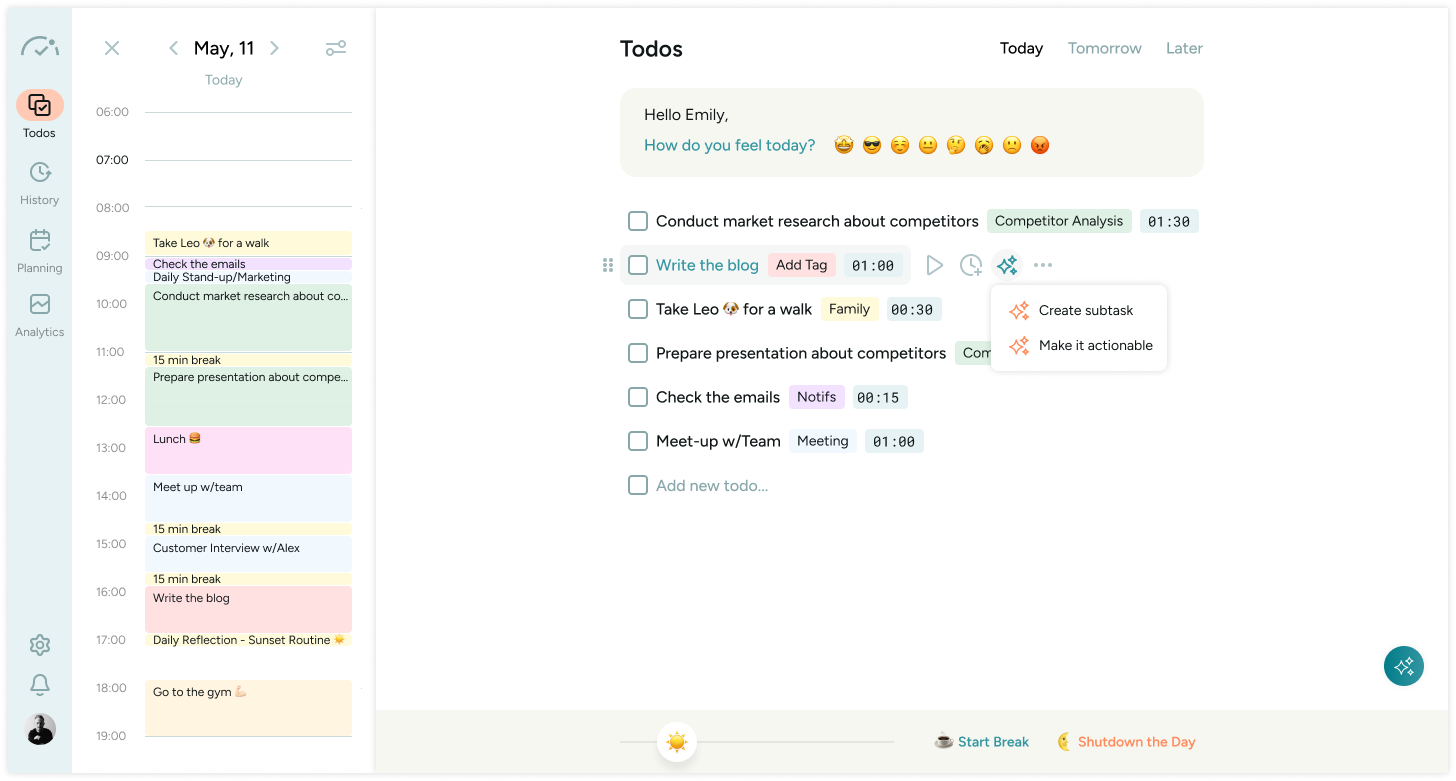
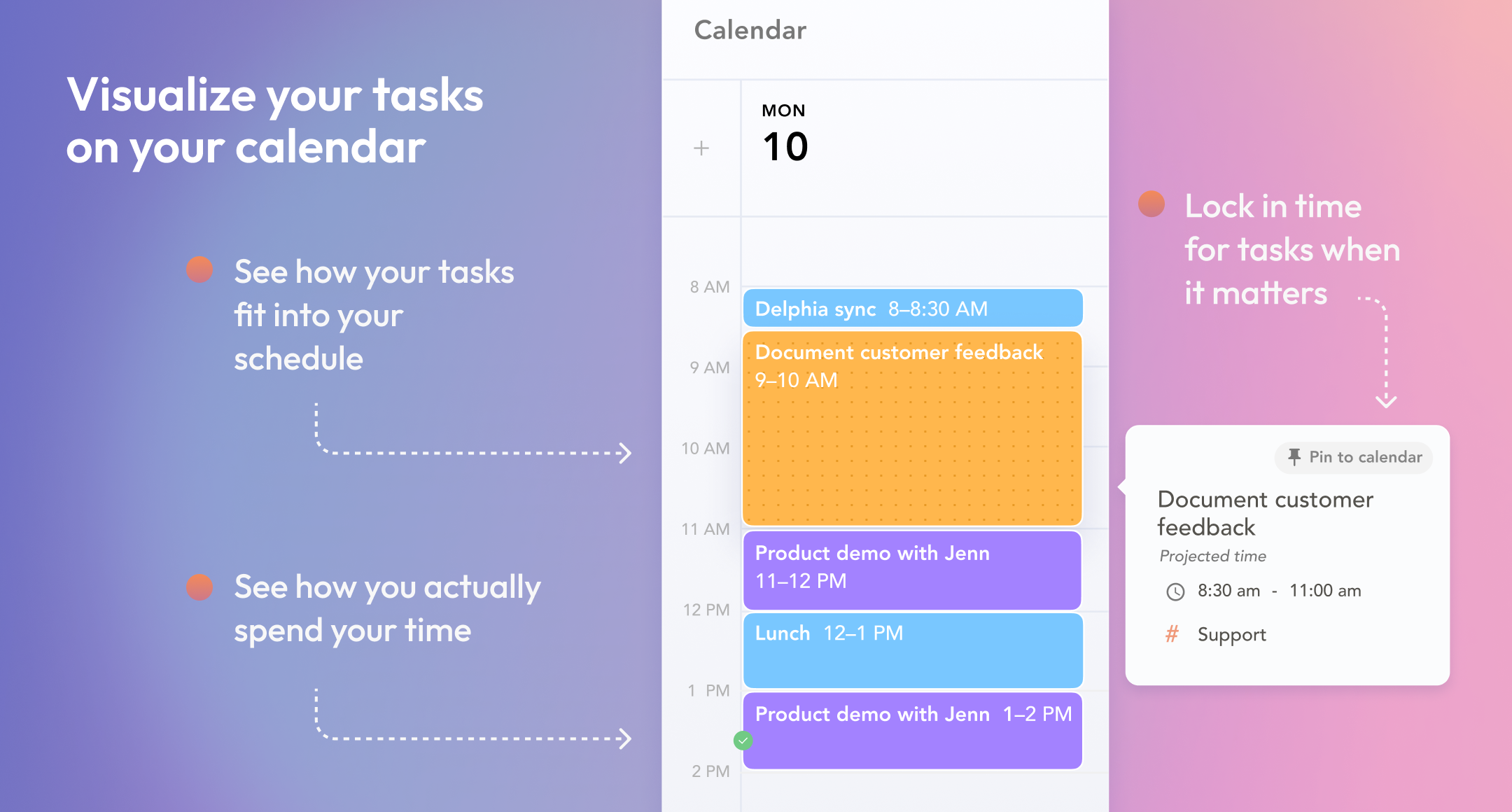
Sunsama has a clean, calendar-centric design. You see your tasks alongside your schedule in a side-by-side view, which makes time-blocking intuitive. The visual layout is calm and uncluttered, which matters more than most people realize when you’re sitting down to plan a chaotic week.
BeforeSunset AI’s interface feels lighter and faster to pick up. It has a modern dashboard that surfaces AI-powered insights without overwhelming you. New users can get started in minutes, whereas Sunsama has a modest learning curve.
Both offer helpful onboarding and tooltips, but BeforeSunset AI has the shorter ramp-up time.
Planning and Task Management
This is where the two tools diverge most clearly.
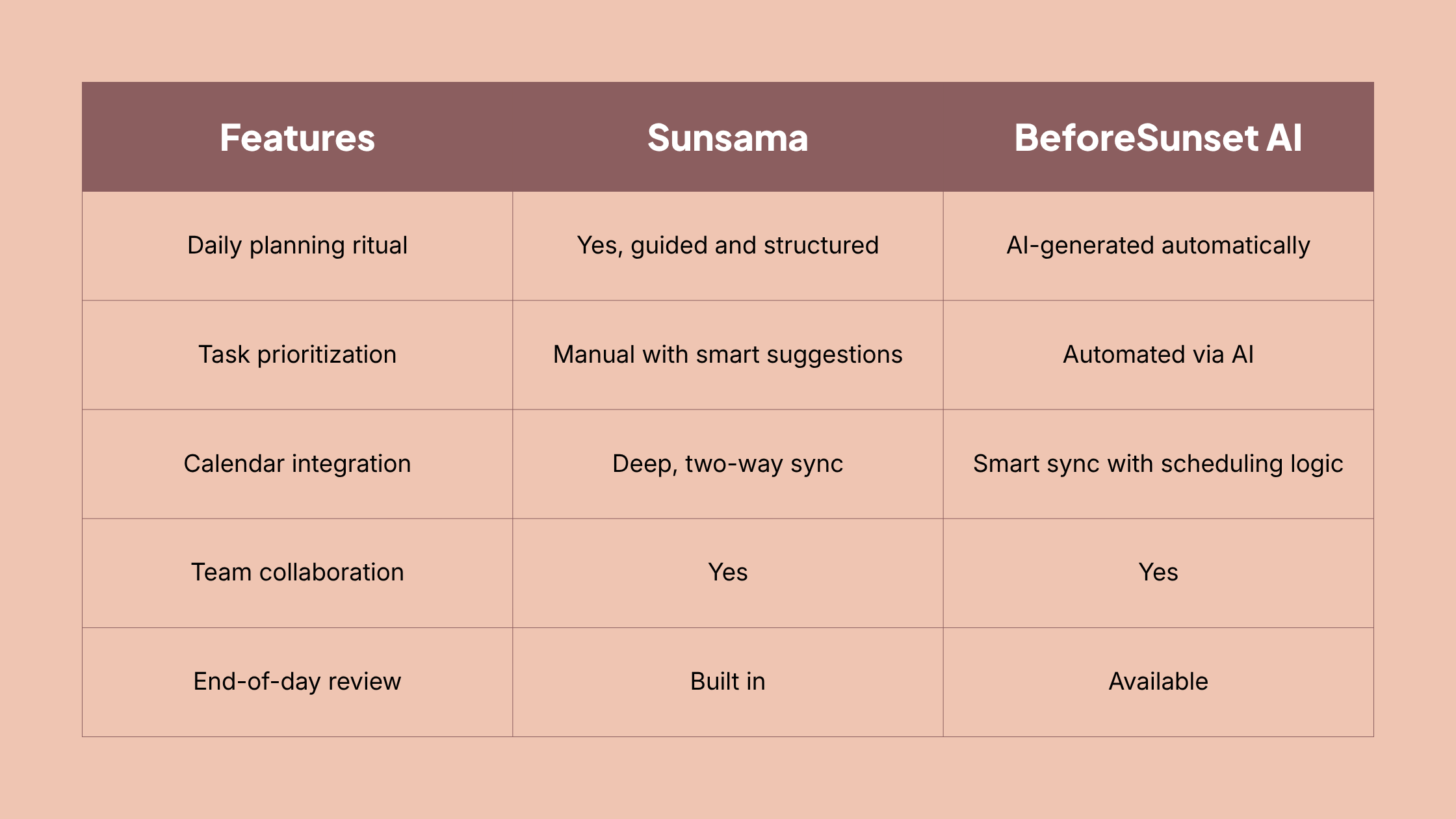
Sunsama’s daily planning ritual walks you through reviewing your calendar, importing tasks from connected apps, and committing to a focused set of work for the day. It’s very intentional. It also encourages you to set a daily work goal, which is a small but meaningful habit-builder. For anyone new to structured scheduling, including those using a digital planner for beginners for the first time, Sunsama’s guided ritual can be a great training ground for building consistent planning habits.
BeforeSunset AI automates much of that process. It looks at your task list and calendar, then suggests how to fill your day. You can override its suggestions, but the default is to let it do the heavy lifting. This is genuinely useful when you’re overwhelmed and just need something to tell you what to work on next.
AI Capabilities
Sunsama’s AI helps with task duration estimates, grouping suggestions, and productivity insights. It learns from your habits over time, but you remain in the driver’s seat for most decisions.
BeforeSunset AI leans harder into automation. It predicts how long tasks will take, builds your schedule dynamically, and balances your workload so you’re not overloaded by Thursday. If you’re also exploring tools like Reclaim AI for calendar defense, it’s worth knowing that Reclaim specializes in protecting time blocks for habits and meetings, while BeforeSunset AI focuses on task-level daily scheduling. The two can actually complement each other depending on your setup.
Integration Capabilities
Sunsama connects with a broader range of project management and communication tools, including Asana, Jira, Trello, Notion, Slack, and Microsoft Teams. If your team is spread across multiple platforms, Sunsama is the stronger connector.
BeforeSunset AI integrates with Google Calendar, Outlook, and popular task apps. Its integrations are solid but more focused. The trade-off is simplicity: fewer connections, but smoother AI-powered scheduling logic. For content creators and bloggers who also use SEO research tools like Rank Prompt in their workflow, BeforeSunset AI’s clean interface keeps things from getting cluttered across too many tabs and tools.
Pricing Comparison
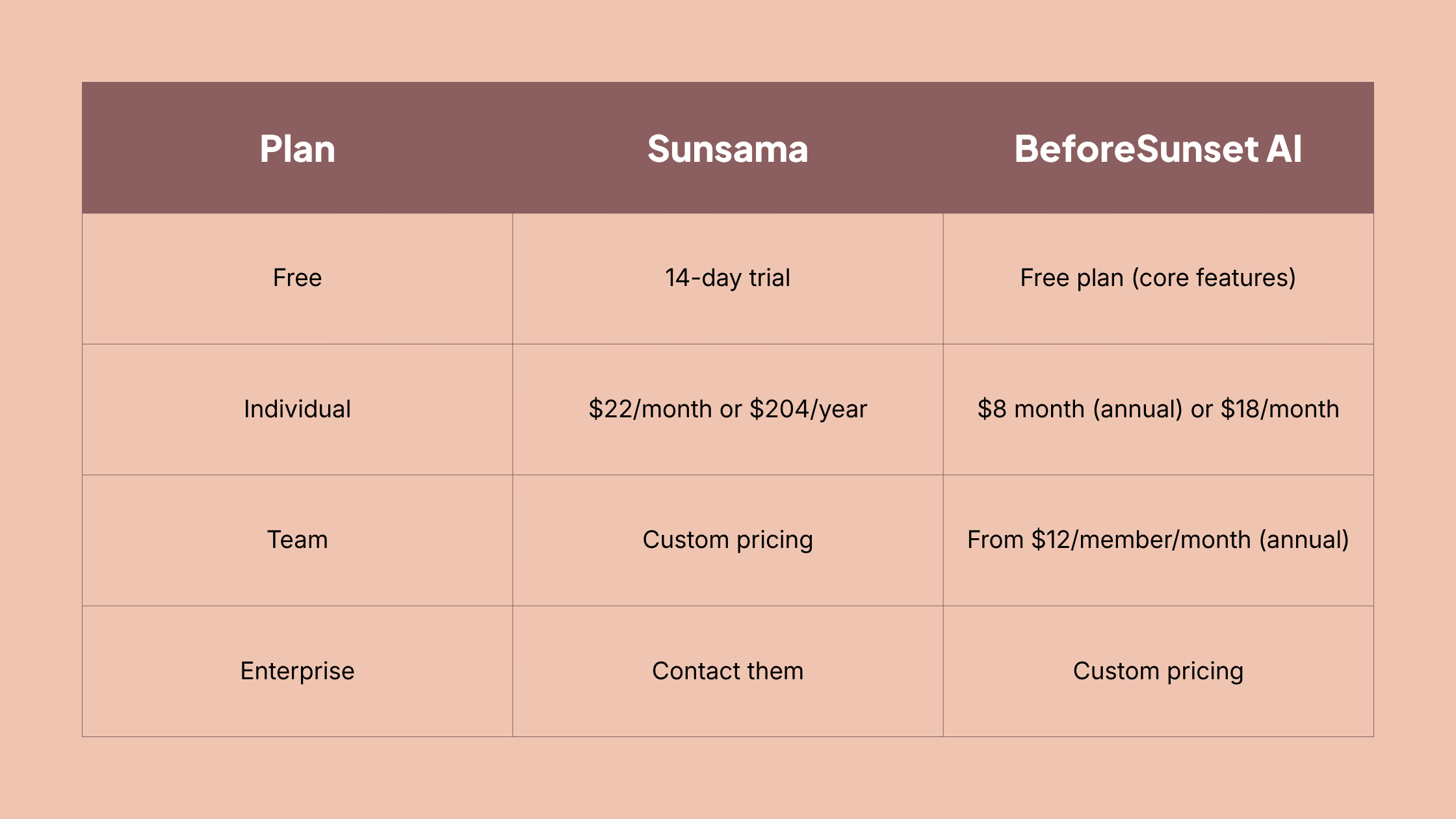
Sunsama’s pricing reflects its depth. At $20/month, it sits at the premium end of individual productivity tools. BeforeSunset AI at $8/month annually is significantly more accessible, with a free plan that lets you test the core features without any time pressure.
For small business owners juggling multiple software subscriptions (including hosting stacks running on platforms like Plesk), that $12/month gap between tools adds up over a year. BeforeSunset AI’s free tier is a genuine product, not a stripped-down teaser, which makes the decision easier for budget-conscious users.
Who Each Tool Is Best For
Choose Sunsama If:
You work best with structure and ritual. You want deep integrations with project management tools like Asana, Jira, or Notion. You manage a team and need collaborative planning built into your workflow. You prefer to manage your time by blocking it visually on a calendar rather than relying on automation.
Sunsama is particularly strong for knowledge workers, consultants, project managers, and academics who benefit from a daily planning ceremony. It also works well for neurodivergent users who thrive within predictable, structured routines.

Choose BeforeSunset AI If:
You want the AI to handle more of the planning work for you. You’re juggling a fast-moving schedule and need daily agendas built quickly. You’re price-sensitive or want to start free before committing. You value flexibility and want a tool that adapts to your day rather than locking you into a rigid structure.
BeforeSunset AI pairs naturally with timeboxing for work-life balance strategies, since the AI allocates your time blocks automatically based on task weight and available hours rather than asking you to calculate that yourself. This is especially useful during hectic weeks when your calendar is already half-full before you even sit down to plan.
For individuals with ADHD who also lean on calming supports at home, like an ADHD support pet for focus and anxiety, BeforeSunset AI’s low-friction setup means less mental overhead at the start of each day.
How to Make Your Final Decision
Start by asking yourself one question: do you want to plan your day, or do you want your day planned for you?
If planning itself feels energizing and meaningful, Sunsama is your tool. If planning feels like a chore you keep skipping, BeforeSunset AI wins.
Beyond that, factor in your team’s needs, your existing integrations, and your budget. Both platforms offer trials or free plans, so there is no real risk in testing before committing. Spend one full work week with each, track how your planning sessions actually feel, and let that experience guide the decision.
One practical note for content creators: if you’re running a blog and using link-building services like fatjoe to grow your authority, keeping your content calendar separate from your task manager (whether you use Sunsama or BeforeSunset AI) will prevent your editorial workflow from bleeding into your personal productivity planning. The two serve different purposes.
And if missed deadlines have ever left you feeling like your disorganization is hurting friends or colleagues waiting on your work, both tools are designed to help you follow through more consistently. Not by adding pressure, but by making it easier to show up.
The Smarter Choice for Most Modern Workers
When you look at the full picture of the Sunsama vs BeforeSunset AI comparison, BeforeSunset AI has a strong edge for most users. The free plan removes the barrier to entry. The AI does more of the heavy cognitive work upfront. And at $8/month (billed yearly), the value is hard to argue with.
Sunsama remains the better choice for users who want depth, ritual, and tight integrations with their existing tool stack. It is a premium product that rewards the investment for the right person.
Both tools represent the future of personal productivity. The only wrong move is staying stuck with a planning method that is not working for you.
Try BeforeSunset AI and Plan Your Day in Minutes
Stop dreading your to-do list. BeforeSunset AI builds your daily schedule automatically so you spend less time planning and more time doing what actually matters.
Frequently Asked Questions
Is BeforeSunset AI better than Sunsama?
BeforeSunset AI is better for users who want automated, AI-driven scheduling at a lower price point. Sunsama is better for those who prefer a structured daily planning ritual with deeper integrations.
Can I use BeforeSunset AI for free?
Yes. BeforeSunset AI offers a free plan with core scheduling and task features included. Paid plans start at $8/month billed annually.
Which tool is better for ADHD users?
Both tools can support ADHD users, but for different reasons. Sunsama’s guided ritual creates predictable structure, while BeforeSunset AI reduces planning overwhelm by automating schedule-building entirely.

Maria is a digital marketing professional, specializing in content marketing and SEO. She's a neurodivergent who strives to raise awareness, and overcome the stigma that envelopes around mental health.





No Comment! Be the first one.