


Table of Contents
- Can Slowing Down at Mealtime Actually Help You Increase Focus During the Day?
- Limiting Phone Distractions: A Practical Strategy for ADHD Focus
- Listening to Your Body: The ADHD Signal You Might Be Ignoring
- The Right Tools Make It Easier to Stay on Track
- How Timeboxing Helps You Increase Focus During the Day
- Finding Your Own Rhythm
- Mindful eating and stable blood sugar directly affect how well your brain can focus throughout the day.
- Reducing phone use during work blocks protects your attention from constant fragmentation.
- Recognizing burnout signals early is one of the most overlooked focus strategies for ADHD brains.
- ADHD-friendly AI planning tools like BeforeSunset AI and Reclaim AI can take the mental load off scheduling so you can save your energy for actual work.
- Small, consistent habits compound over time and build more reliable focus than willpower alone.
Figuring out how to increase focus during the day is one of those things that sounds straightforward until you actually have ADHD and realize the usual advice was never written with your brain in mind. You sit down to work and watch the next hour dissolve into open tabs, half-finished thoughts, and snack trips you do not remember taking. Sound familiar?
The ADHD brain is not broken; it is wired differently. It craves novelty, reacts to overwhelm in big ways, and often struggles with executive dysfunction, which makes starting, shifting, and sustaining tasks genuinely harder than it is for most people. That is not an excuse; it is just science. And once you understand that, you can stop fighting your brain and start working with it.
It is also worth noting that ADHD and Autism frequently co-occur, which can add another layer to how someone experiences attention and sensory overwhelm. If that resonates with you, know that everything here can be adapted to fit your specific needs.
Think of what follows as gentle, flexible nudges rather than rigid rules. Small shifts can make a surprisingly big difference in how present and grounded you feel throughout the day.
Can Slowing Down at Mealtime Actually Help You Increase Focus During the Day?
It sounds almost too simple, but hear this out. Eating mindfully, which means really tasting your food instead of scrolling between bites, is one of the quieter ways to train your nervous system to slow down.
For ADHD brains, meals often get rushed or skipped entirely. But blood sugar fluctuations are a real contributor to attention crashes. When you eat in a hurry or forget to eat altogether, your focus takes the hit first.
Try this: before you sit down to eat, take two or three deep breaths. Not a meditation retreat, just a beat. Let your body shift out of go-mode. Eat without a screen in front of you, even for just ten minutes. Notice the flavors, the texture, the temperature. This is not about being precious with your food; it is about giving your brain a moment to reset so it is ready to work when you need it.
Research also shows that protein-rich meals and complex carbohydrates support steadier dopamine levels, which is the neurotransmitter that ADHD brains are often low in. So what you eat matters just as much as how you eat it.

Limiting Phone Distractions: A Practical Strategy for ADHD Focus
Okay, this one might sting a little, but it is worth saying. Smartphones are designed to capture attention, and for an ADHD brain that is already susceptible to distraction, that design is working overtime.
The habit of picking up your phone during micro-moments, like waiting for the kettle, riding an elevator, or waking up in the morning, might feel harmless. But it fragments your attention in ways that make it harder to settle into deep focus later. Each notification is a tiny interruption that resets the mental state you have been building.
A few things that genuinely help: turning your phone face-down during work blocks, using focus modes or app timers, or even leaving your phone in a different room. You do not have to go completely off-grid; just create a little friction between you and the device so the reach becomes intentional rather than automatic.
When you are not on your phone, try a quick body scan. Notice how your head feels, your shoulders, your hands. This kind of mindful check-in brings you back into your body and out of the mental scatter that tends to follow a scrolling session. It is a small act of presence, and presence is the foundation of focus.
Listening to Your Body: The ADHD Signal You Might Be Ignoring
ADHD can make it harder to recognize when you are burning out until you are already in the thick of it. That zoned-out, restless, cannot-even-start-a-sentence feeling? That is often your nervous system waving a white flag, and it is worth listening to.
Pushing through burnout does not produce better work. It usually produces a lot of frustrated staring at a blinking cursor. Instead, try building intentional breaks into your day. The Pomodoro Technique works by breaking work into focused 25-minute blocks followed by 5-minute breaks, and it turns out to be a great fit for ADHD brains that thrive on time-boxed structure.
When exploring ADHD treatment for adults, lifestyle strategies like movement, sleep, and structured rest are often recommended alongside medical support. Even a 10-minute walk has been shown in studies to improve executive function in people with ADHD, so do not underestimate the small stuff.
And for some, intentional wind-down rituals at the end of the day make a genuine difference in how rested and ready their brain feels the next morning. Some people find that premium THC vape pens are part of their personal evening routine for unwinding, though it is always worth checking in with a healthcare provider about what works best for your specific needs, especially alongside any ADHD management plan you already have.
Sleep hygiene, hydration, and reducing chronic stress all play a role in how available your focus actually is on any given day. Be gentle with yourself here. Some days, the most productive thing you can do is rest. Your brain is not the enemy; it just needs a little more tending.
The Right Tools Make It Easier to Stay on Track
One of the most underrated things you can do for ADHD focus is set up your environment, and that includes your digital one. There is a growing category of ADHD-friendly work tools designed to reduce friction in planning, scheduling, and staying accountable throughout the day.
BeforeSunset AI is a daily planner that helps you reflect on your tasks and plan your next day with intention. It is particularly helpful if you tend to over-schedule and then crash. Reclaim AI goes a step further by automatically scheduling your tasks and habits around your existing calendar, so focus blocks actually make it into your day without you having to manually protect them.
If you create content or need to communicate clearly at work, Pressmaster AI can help you draft and refine professional content without spending hours staring at a blank page. That kind of cognitive load reduction is genuinely helpful when your working memory is already stretched thin.
There is also a lot of buzz right now around building AI agents, which are automated workflows that handle repetitive tasks on your behalf. For ADHD users, this can mean fewer decisions to make and fewer context switches throughout the day. You do not have to be technical to use these tools; many are no-code and designed for everyday users.
On the hardware side, if you are a student managing coursework alongside ADHD, a reliable machine matters. ASUS laptops for students offer solid performance without the price tag of premium brands, and a fast, dependable laptop removes one more point of friction from your day.

How Timeboxing Helps You Increase Focus During the Day
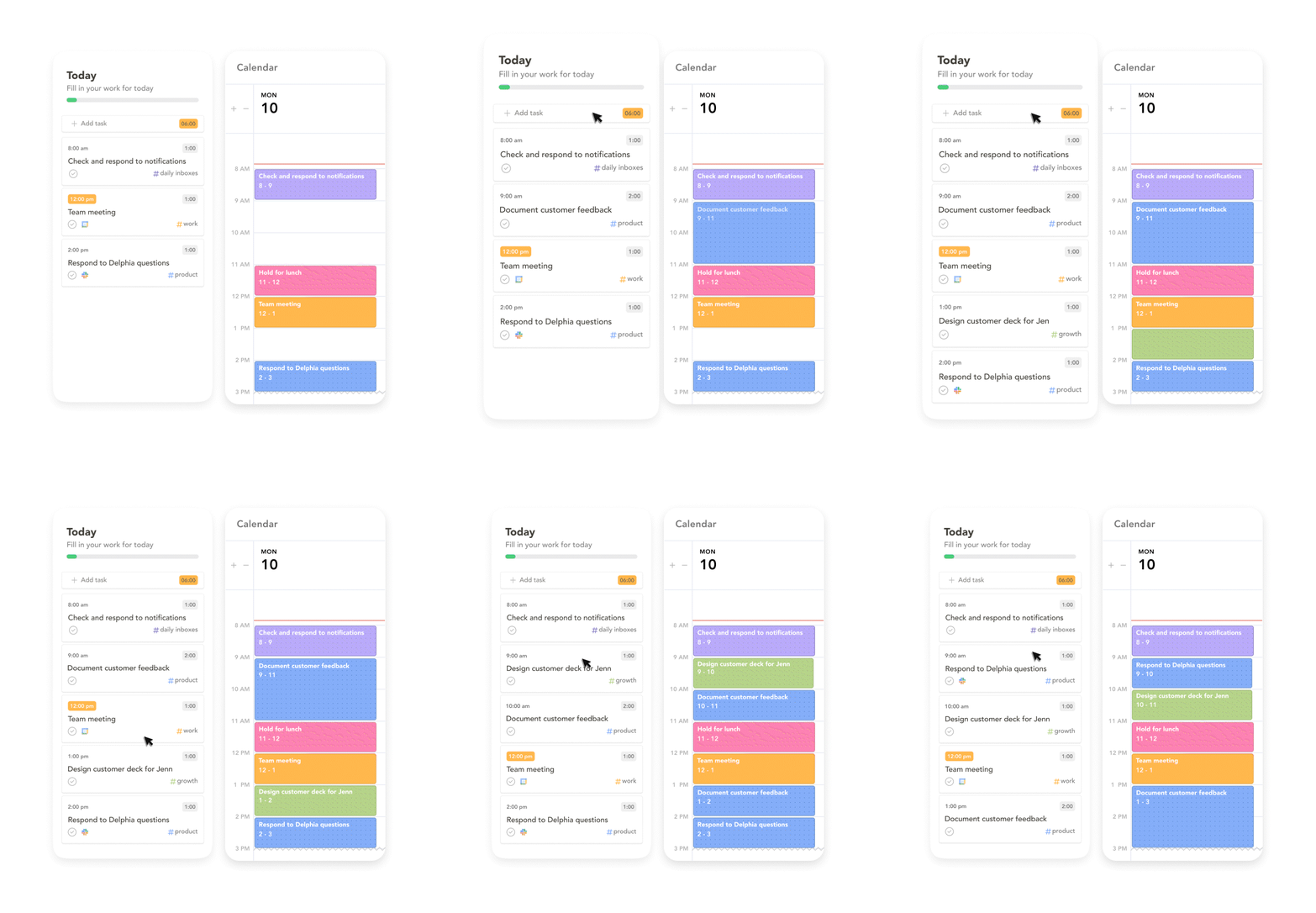
Timeboxing is the practice of assigning a fixed amount of time to a specific task and committing to working only on that task within that window. It is a structured approach that pairs beautifully with ADHD because it removes the open-ended, how-long-will-this-take anxiety that often leads to avoidance.
Tools like Reclaim AI and BeforeSunset AI can automate your timeboxing schedule, so instead of deciding when to work on what, your calendar does it for you. All you have to do is show up to the block. That one shift, removing the decision of when, is often enough to get the ball rolling.
Finding Your Own Rhythm
Learning how to increase focus during the day with ADHD is rarely about willpower; it is about design. It is about setting up your environment, your meals, your phone habits, and your rest in ways that make focus easier to access, not something you have to wrestle for every single morning.
Not every strategy will work the same way for everyone, and that is completely okay. The beautiful thing about knowing your brain is that you get to experiment, adjust, and find what actually fits your life, quirks and all.
Start small. Pick one thing from this list and try it for a week. See what shifts. You might be surprised how much clarity is already waiting for you, just beneath the noise.
Frequently Asked Questions
What is timeboxing and does it help with ADHD?
Timeboxing is the practice of dedicating a fixed time window to one specific task. It works well for ADHD because it replaces open-ended work sessions with clear, manageable chunks that feel less overwhelming to start.
Are there AI tools that are actually helpful for ADHD?
Yes. Tools like BeforeSunset AI and Reclaim AI are especially useful because they handle the scheduling decisions that drain executive function. Pressmaster AI is also helpful for reducing the cognitive effort behind written communication.
Can ADHD and autism occur at the same time?
Yes; ADHD and autism frequently co-occur, a combination sometimes referred to as AuDHD. The experience of attention, sensory processing, and social interaction can look and feel quite different when both are present.
What are the most common ADHD treatment options for adults?
ADHD treatment for adults typically includes a combination of medication, behavioral therapy, and lifestyle strategies like structured routines and sleep hygiene. A qualified psychiatrist or psychologist can help you figure out what combination works best for you.
How long does it take to build better focus habits with ADHD?
It varies from person to person, but most people start noticing small shifts within two to four weeks of consistent practice. The key is starting with one habit at a time rather than overhauling everything at once.

Maria is an accomplished digital marketing professional, specializing in content marketing and SEO. She's a neurodivergent who strives to raise awareness, and overcome the stigma that envelopes around mental health.




No Comment! Be the first one.