

Table of Contents
- The Reality Behind the Diagnosis
- The Cultural Translation Problem and ADHD Awareness in Filipino Society
- The Medication Maze
- What Progress Actually Looks Like
- The Practical Path Forward for ADHD Treatment for Adults
- Why This Matters Beyond Individual Treatment
- What Needs to Change
- Moving Forward
- Frequently Asked Questions
- ADHD treatment for adults in the Philippines is hindered by a severe shortage of psychiatrists (0.46 per 100,000 people) and medication costs ranging from ₱279-₱20,000 monthly, creating significant financial and logistical barriers.
- Cultural misconceptions labeling ADHD symptoms as “laziness” or “playfulness” contribute to underdiagnosis, with overcoming ADHD stigma remaining a critical challenge despite growing awareness.
- Virtual consultations and organizations like iPsych Inc. are expanding access to diagnosis and treatment, though systemic issues around medication pricing and regulatory frameworks still need addressing.
I’ve spent years working with people across different cultures, and one pattern keeps showing up: the gap between what we know about mental health and what we actually do about it.
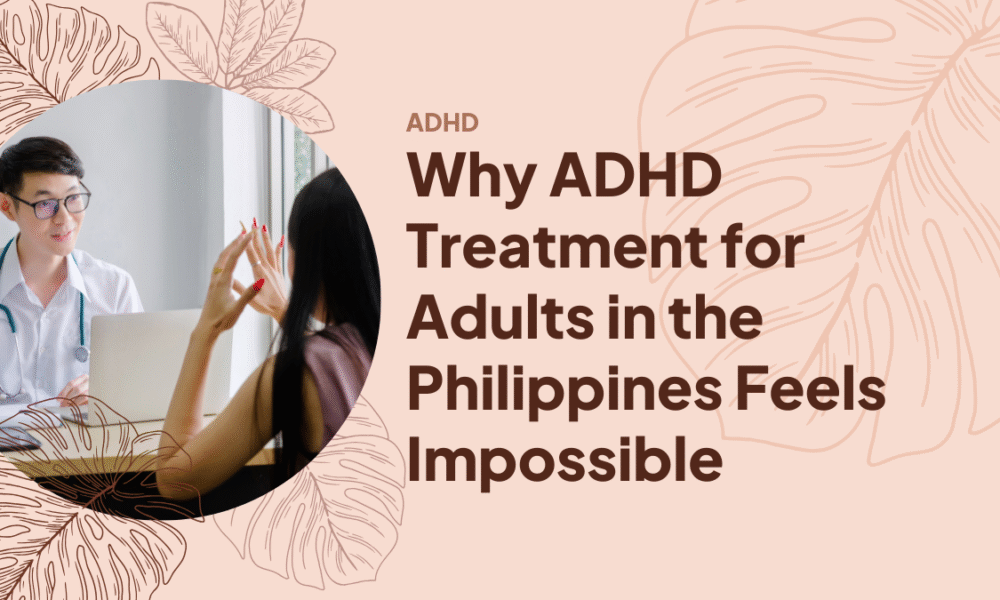
In the Philippines, this gap becomes a chasm when you’re an adult trying to access adhd treatment for adults.
The numbers tell part of the story. ADHD affects approximately 2.5% of adults worldwide, with symptoms common in 9.67% of adults in the Western Pacific Region. But here’s what those statistics don’t capture: the actual experience of trying to get help in a system that wasn’t built for you.
The Reality Behind the Diagnosis
Let’s start with the most basic barrier: finding someone who can actually diagnose you.
The Philippines has 0.46 psychiatrists per 100,000 people. To put that in perspective, that’s roughly one psychiatrist for every 217,000 Filipinos. The WHO considers this far below what’s needed, and that’s putting it mildly.
What this means in practice: adults seeking diagnosis often travel from provinces to Manila to find psychiatrists experienced with adult ADHD. This creates financial and logistical barriers that prevent many Filipinos from receiving proper assessment.
You can suspect ADHD all you want. Getting confirmation is another story entirely.
Even when you find a psychiatrist, you face another challenge. Many healthcare professionals still hold the outdated view that “ADHD is for children” and adults simply “grow out of it.” This causes dismissal of adult patients seeking diagnosis, turning what should be a straightforward medical consultation into an exercise in self-advocacy.

The Cultural Translation Problem and ADHD Awareness in Filipino Society
Here’s where things get complicated in ways that statistics can’t measure.
ADHD symptoms get filtered through cultural interpretation. What clinicians recognize as executive dysfunction, Filipino culture often labels as “kakulitan” (playfulness) or “katamaran” (laziness). These labels misinterpret the condition and propagate severe underestimation of its complexity, making ADHD awareness Filipino society a crucial issue to address.
I’ve seen this pattern in my work across different markets. When you’re dealing with something invisible like ADHD, cultural frameworks shape how seriously people take your struggles.
One of the most prevailing misconceptions: ADHD results from poor parenting or lack of discipline. This creates a culture of blame where parents, especially mothers, are held accountable for what is actually a neurodevelopmental condition. This stigma intersects with ADHD rejection sensitivity, making social interactions and criticism particularly painful for adults struggling with undiagnosed symptoms.
The problem compounds when you internalize these messages.
You start questioning whether your struggles are real or whether you just need to try harder. This self-doubt delays treatment-seeking and makes the diagnostic process even more difficult when you finally pursue it.
The Medication Maze
Let’s talk about what happens when you actually get diagnosed and need medication.
Treatment plans in the Philippines typically include therapy, medication, and lifestyle changes. Cognitive Behavioral Therapy (CBT) is one of the most effective therapeutic approaches, helping individuals develop strategies to manage executive dysfunction through practical skills for organization, time management, and focus.
For medication, stimulants like methylphenidate and non-stimulant options such as atomoxetine are available. But “available” doesn’t mean “accessible.”
A 36-milligram Concerta tablet costs ₱279 ($4.86) per piece. Ritalin runs ₱90 ($1.57) per piece. Some families spend around ₱20,000 ($348.52) monthly for mental health medications.
Here’s where the system reveals its contradictions: methylphenidate is included in the Philippine National Formulary as an essential medicine. But it’s not listed in the 2024 Drug Price Reference Index.
This leaves patients vulnerable to excessive markups with no regulatory protection.
The bureaucracy adds another layer. You need a “yellow prescription” from a psychiatrist with an S-2 license issued by PDEA before purchasing methylphenidate. This makes sense from a regulatory standpoint, but it creates practical barriers when psychiatrists are already scarce.
In a 2022 survey, 80% of adolescents and 60% of adults in the Philippines admitted to experiencing symptoms of ADHD. Yet there’s no national data for the number of Filipino adults diagnosed with ADHD. The National Survey for Mental Health and Well-being shows ADHD is prevalent in 1.29% of Filipino children, but adult prevalence remains unmeasured.
This data gap matters. Without accurate prevalence data, policymakers can’t allocate resources appropriately or understand the true scope of the problem.
What Progress Actually Looks Like
I’m not here to paint everything as hopeless. Things are changing, just not as fast as they need to.
The Philippine Mental Health Act (R.A. 11036) passed in 2018, establishing a comprehensive mental health policy that recognizes the need for accessible mental health services, including for neurodevelopmental conditions like ADHD.
The Philippine Council for Mental Health Strategic Framework for 2024 to 2028 has set goals for the national government to provide available and affordable medicines for mental, neurological, and substance use disorders.
Policy frameworks matter. But implementation determines whether they actually help people.
Organizations like iPsych Inc. now offer ADHD diagnosis and personalized treatment, including therapy and medication management both in-clinic and online. The ADHD Society of the Philippines has compiled lists of mental health providers where people can get assessed for ADHD.
Specialists like Dr. Melissa Paulita Mariano (Fun Fact: she’s my psychiatrist) focus specifically on the treatment of adults with ADHD, mood, anxiety, and personality disorders, currently seeing patients through virtual consultations.
These resources represent real progress. Virtual consultations particularly help address the geographic barriers that make treatment inaccessible for many Filipinos outside Manila.
The Practical Path Forward for ADHD Treatment for Adults
If you’re an adult in the Philippines suspecting you have ADHD, here’s what the actual landscape looks like:
Finding Assessment and Navigating ADHD Treatment for Adults
Start with the ADHD Society of the Philippines provider list. Organizations like iPsych Inc. offer both in-person and virtual assessments, which can save you the trip to Manila if you’re in the provinces.
Virtual consultations have expanded access significantly. You still need to navigate the bureaucracy, but at least geography becomes less of a barrier.
Understanding Costs
Budget for diagnosis costs, ongoing medication expenses, and therapy sessions. The ₱20,000 monthly figure some families spend represents the higher end, but medication alone will run several thousand pesos monthly depending on your prescription.
Ask about generic options and check whether your health insurance covers any portion of treatment. Some policies have started including mental health coverage, though it’s far from universal.
Navigating Medication Access
Once diagnosed, you’ll need to establish a relationship with a psychiatrist who can provide the required yellow prescriptions. This means regular follow-ups, which add to both time and financial costs.
Some patients report pharmacies running out of methylphenidate, creating supply chain issues on top of everything else. Having backup pharmacies and planning ahead for refills becomes necessary.
Building Support Systems
Treatment works best when combined with lifestyle adjustments and support. CBT provides practical strategies for managing ADHD symptoms, but you also need people who understand what you’re dealing with.
This is where community resources like the ADHD Society of the Philippines become valuable. Connecting with others navigating the same system helps you learn practical workarounds and feel less isolated in the process. For many adults, navigating sensory overload during Christmas and other high-stimulation environments becomes more manageable with peer support and shared coping strategies.

Why This Matters Beyond Individual Treatment
I work in digital marketing, where attention and executive function directly impact productivity. ADHD affects how people process information, manage tasks, and maintain focus.
When adults can’t access treatment, the impact extends beyond personal struggles. It affects workplace performance, relationships, and economic productivity.
The gap between awareness and access creates a situation where people know something is wrong but can’t get the help they need. This leads to self-medication, burnout, and internalized shame about struggles that have neurological roots. Understanding how to calm ADHD tantrums and manage emotional dysregulation becomes even more challenging without proper professional support.
The cost of untreated ADHD compounds over time.
Careers stall. Relationships strain. Mental health deteriorates as people blame themselves for symptoms they can’t control without proper treatment.
What Needs to Change
The policy frameworks exist. The Philippine Mental Health Act provides the foundation. The Strategic Framework sets goals.
But implementation lags behind intention.
We need more psychiatrists trained in adult ADHD diagnosis and treatment. We need medication pricing regulations that prevent excessive markups on essential medicines. We need national prevalence data that accurately captures how many Filipino adults are affected.
We need cultural shift away from viewing ADHD as character weakness or parenting failure toward understanding it as a treatable neurodevelopmental condition. Overcoming ADHD stigma requires both systemic education and individual advocacy from those living with the condition.
Most immediately, we need to streamline the path from suspicion to diagnosis to treatment. The current system requires resources, persistence, and luck that many people simply don’t have.
Moving Forward
If you’re reading this because you suspect you have ADHD, the landscape I’ve described might feel overwhelming.
Here’s what I want you to know: the barriers are real, but they’re not insurmountable.
Resources exist. Organizations like iPsych Inc. and the ADHD Society of the Philippines are working to improve access. Virtual consultations have reduced geographic barriers. Specialists focusing on adult ADHD are practicing in the Philippines.
The system has problems, but people are navigating it successfully and getting treatment that improves their lives.
Start with what you can control. Research providers. Understand costs. Connect with communities of people managing ADHD in the Philippines. Gather information about your symptoms and how they impact your daily life.
The diagnostic process takes time and resources, but having a clear understanding of what you’re dealing with changes everything. Treatment options exist once you get through the assessment phase.
Your struggles are real. The system’s failures don’t negate your experience.
The gap between awareness and access frustrates me because I’ve seen how effective treatment transforms people’s lives. The barriers that prevent Filipinos from accessing ADHD care represent a solvable problem that policy, resources, and cultural shift can address.
Until those systemic changes happen, understanding the landscape helps you navigate it more effectively. Know what you’re facing. Know what resources exist. Know that the difficulties you’re experiencing getting help reflect system failures, not personal inadequacy.
The conversation about adult ADHD in the Philippines is growing. More people are speaking up about their experiences. More providers are specializing in adult ADHD. More resources are becoming available.
Progress happens slowly, then suddenly. We’re still in the slow phase, but movement is happening.
If you’re in the middle of seeking diagnosis or treatment, you’re part of that movement. Every person who navigates this system and gets proper care makes the path slightly clearer for the next person.
That’s not how it should be. But it’s how it is right now.
And knowing what you’re facing is the first step toward getting through it.
Frequently Asked Questions
How much does ADHD diagnosis cost in the Philippines?
Initial psychiatric consultations typically range from ₱1,500 to ₱3,000, with ongoing medication costs between ₱279 to ₱20,000 monthly depending on prescription type and dosage.
Can I get diagnosed with ADHD online in the Philippines?
Yes, several providers including iPsych Inc. and specialists like Dr. Melissa Paulita Mariano offer virtual consultations for ADHD assessment and treatment.
What medications are available for adult ADHD in the Philippines?
Stimulants like methylphenidate (Concerta, Ritalin) and non-stimulant options such as atomoxetine are available, though they require a yellow prescription from a PDEA-licensed psychiatrist.
Does PhilHealth cover ADHD treatment?
PhilHealth coverage for ADHD treatment is limited and varies by policy; it’s best to check directly with your provider about mental health benefits.
How long does it take to get an ADHD diagnosis in the Philippines?
The timeline varies depending on provider availability, but expect several weeks to months from initial consultation to formal diagnosis, particularly if you’re outside Metro Manila.

Maria is an accomplished digital marketing professional, specializing in content marketing and SEO. She's a neurodivergent who strives to raise awareness, and overcome the stigma that envelopes around mental health.