


Table of Contents
- Recognizing the Signs of a Toxic Family Culture
- The Cultural Script That Keeps Us Silent
- When Discomfort Finally Gets a Name
- The Difference Between Conflict and Toxicity
- The Mental Health Tax of Keeping Peace
- The Moment Everything Shifts
- When Some People Get It and Others Don’t
- Progress Looks Different Than We Think
- The Strength to Look Inward
- Setting Boundaries Without Inherited Guilt
- What We’re Really Fighting For
Key Takeaways
- Recognizing the signs of a toxic family culture requires us to confront accepted norms about family dynamics.
- Toxicity manifests as patterns of harmful behavior that persist over time, impacting mental health and self-worth.
- Cultural scripts, especially in Filipino families, often silence discussions about harmful behaviors, reinforcing dysfunction.
- Setting boundaries becomes essential for self-protection, allowing individuals to reclaim their mental health and well-being.
- Breaking generational trauma can create a healthier environment for future generations, fostering better relationships.
Understanding the signs of a toxic family culture starts with recognizing that we grow up believing our family dynamics are normal. The way your relatives greet you at gatherings, the questions they ask, the comments they make—all of it becomes background noise. You accept it as “just how families are.”
Until one day, you don’t.
That shift happens differently for everyone. Sometimes it’s a conversation with friends where you realize their families don’t operate the same way. Sometimes it’s hitting rock bottom and finally recognizing the patterns that brought you there. Sometimes it’s becoming aware of mental health, body positivity, or generational trauma—and suddenly seeing your family through a completely different lens.
The uncomfortable truth is that toxic family cultures often hide in plain sight. Most of us grow up believing that our family dynamics are normal even when they’re not, and dysfunctional families don’t recognize their toxic nature until they encounter other families later in life. Recognizing these signs of a toxic family culture requires us to challenge deeply held beliefs about what family “should” be.
Recognizing the Signs of a Toxic Family Culture
Think about how family toxicity evolves as you age.
When you’re young, it’s about grades. “Are you an honor student? How many medals do you have? How many competitions have you won?” The questions feel innocent enough, but they plant seeds of doubt. Am I good enough? Why don’t I have as many achievements as my cousin?
As you get older, the metric shifts. Now it’s about weight, career, salary. “You look like you gained weight. How much are you making? When are you getting married? When will you have children?”
The measurement changes, but the underlying message remains constant: You’re being evaluated. You’re being compared. You’re not quite measuring up.
This creates what researchers call the normalization paradox. Some patterns of generational trauma may feel invisible to those who use them, since they’ve been part of their entire lives and the lives of their family members. When you’re still in the middle of a toxic dynamic, behavior becomes normalized over time, making it extraordinarily difficult to see the situation clearly.
The Cultural Script That Keeps Us Silent
In Filipino culture, and many Asian cultures, there’s an added layer of complexity. Communication barriers within Filipino families often stem from deeply ingrained hierarchical structures. Body shaming has become so normalized that people anticipate it at family gatherings, with elders responding “That’s just the way it’s always been.”
Because the Philippines was colonized for almost 400 years, generations have been taught that their culture is inferior—a phenomenon called colonial mentality. This conditions people to believe their ethnic or cultural identity is inferior to Western culture or whiteness. Layer that with traditional family hierarchy where questioning elders is taboo, and you have a perfect storm for dysfunction to thrive unchallenged. This cultural expectation of a debt of gratitude in Filipino families—the concept of “utang na loob”—often silences those who experience harm.
The script goes like this: Family comes first. Respect your elders. Blood is thicker than water. Don’t air your dirty laundry. What happens in the family stays in the family. This perpetual debt of gratitude creates an environment where speaking up feels like betrayal.
These aren’t just sayings. They’re invisible rules that make it nearly impossible to name harm when you see it.
When you try to open up about your mental health, your struggles, your actual well-being, the response is often dismissive. “You just need to pray more. You lack faith. You’re being too sensitive.”
Your feelings get minimized. Your reality gets questioned. And you learn to stay quiet.
When Discomfort Finally Gets a Name
Here’s what makes toxic family culture so insidious: you often feel the discomfort long before you have the language to describe it.
As a child being compared to other kids, you feel that knot in your stomach. You feel the insecurity breeding, the self-doubt taking root. But you don’t have the framework to say “this is harmful” or “this is emotionally abusive.” You just think something is wrong with you.
The breakthrough comes when you gain access to new information. Mental health awareness. Body positivity movements. Conversations about generational trauma. Suddenly you have words for what you’ve been experiencing.
The toxicity was always there. The harm was always real. But awareness gives you permission to trust your discomfort.
Research shows that family influence accounts for 30% of body shaming experiences among adolescents. That means the people who are supposed to protect you are often the ones causing the most damage to your self-image.
The Difference Between Conflict and Toxicity
Every family has disagreements. Every family has moments of tension. That’s normal.
Toxicity is different.
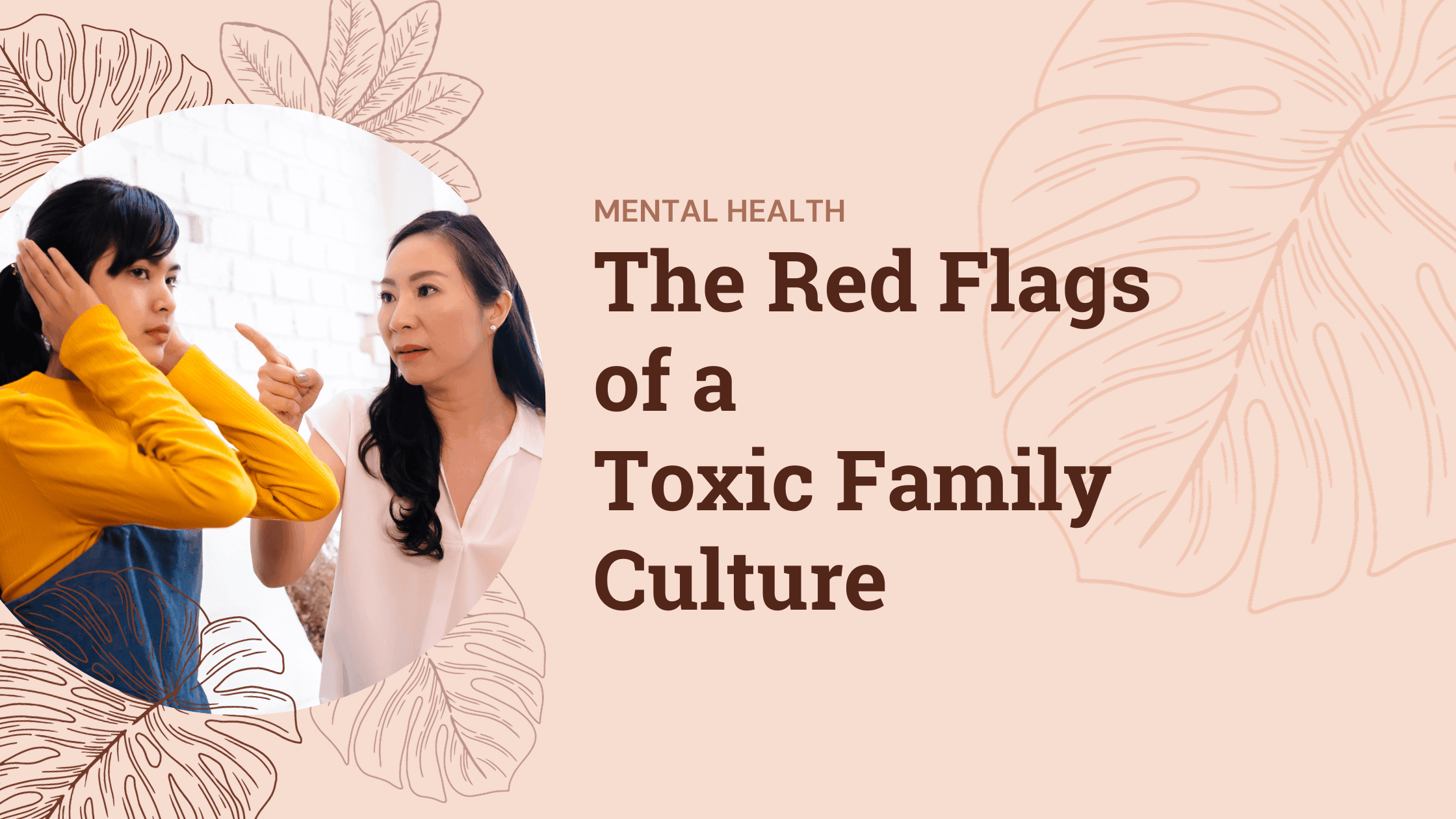
Toxic family culture is about patterns, not incidents. It’s the consistency and pervasiveness of harmful behaviors that distinguishes dysfunction from normal family conflict.
One comment about your weight at a family gathering might be thoughtless. A pattern of body-shaming comments at every gathering, year after year, despite you asking them to stop—that’s toxicity.
One disagreement about your career choices is normal. Constant criticism, comparison to other family members, and dismissal of your achievements—that’s toxicity.
The key question is: Does this behavior happen once, or does it happen consistently? When you ask for it to stop, does it stop, or does it continue?
In healthy families, everyone’s feelings matter equally. No one person holds the emotional remote control for the entire household. Disagreements happen, but they’re resolved with mutual respect.
In toxic families, there’s usually someone whose moods dictate the entire family’s emotional temperature. Everyone tiptoes around certain topics or certain people. And when you try to set boundaries, you’re labeled as difficult, ungrateful, or too sensitive.
The Mental Health Tax of Keeping Peace
Living with toxic family dynamics extracts a specific kind of toll. Generational family problems Philippines communities experience often manifest in these mental health costs, passed down through generations without examination or intervention.
You’re constantly on guard. You’re constantly protecting yourself in what’s supposed to be a safe space. You rehearse conversations in your head before family gatherings. You plan exit strategies. You brace yourself for the comments you know are coming.
This isn’t paranoia. It’s survival.
When people live with difficult or toxic family members, the complexities of navigating those relationships become a significant source of anxiety and unease. Even just the thought of engaging with family can bring dread because any interaction can lead to harassment, mistreatment, or verbal abuse—yet people are made to feel like they must engage with these family members to “keep the peace.”

The cost shows up in your body. Back pain. Jaw clenching. Digestive issues. Feeling drained after family events. These aren’t random symptoms—they’re your body responding to emotional threat.
The cost shows up in your mental health. Research indicates that it’s estimated 70% of adults—about 223 million people worldwide—have reported at least one traumatic experience in their life. Many of those experiences happen within families.
Dysfunctional family dynamics warp your whole sense of self-worth, feeding beliefs that you’re not good enough, that people don’t really love or care for you and never will.
And here’s the part that makes it even harder: you’re often made to feel guilty for protecting yourself. Family members who attempt to set boundaries are labeled selfish, wrong, or uncaring, leading to internalized guilt and self-doubt.
The Moment Everything Shifts
The realization doesn’t always come gradually. Sometimes it hits you like a truck.
You’re going along, making excuses for family behaviors, defending them to friends, convincing yourself it’s not that bad. Then something happens—a rock bottom moment, a conversation, an incident—and suddenly you can’t unsee it anymore.
For many people, that shift comes from a place of protection. Not self-protection, but protection of others. I don’t want other people to experience what I experienced. I don’t want the next generation to carry this forward.
That’s when you find your voice.
You start calling it out. “Instead of commenting on someone’s weight, maybe ask how they’re actually doing. You don’t know what they’re going through. They might be stress eating. Food might be their coping mechanism.”
You start setting boundaries. “I’d rather not discuss that.” You redirect conversations. You remove yourself from situations that feel unsafe.
You start educating your immediate family about mental health, about the impact of their words, about generational trauma.
And sometimes, if you’re lucky, they listen.
When Some People Get It and Others Don’t
Breaking toxic patterns doesn’t happen all at once. It doesn’t happen uniformly across the entire family. These toxic traits Filipino workplace culture often mirrors—the hierarchical respect, the avoidance of direct confrontation, the expectation of unquestioning loyalty—show up in family dynamics as well.
You’ll have immediate family members who hear you, who ask questions, who start changing their behavior. That’s where hope lives.
You’ll have extended family members who are so set in their ways that they see nothing wrong with how they’ve always done things. They’re not going to change.
The reality is this: you’re creating two different family cultures that exist simultaneously.
There’s the old guard who still think and judge the same way. They’ve just learned to code-switch depending on who’s in the room. They’ve learned that certain behaviors have consequences now—they’ll be called out, and it won’t look good on them.
Then there’s the new guard. The younger generation. The immediate family members who’ve done the work. You’re actively creating a different culture. You’re not waiting for everyone else to change their minds. You’re just making it clear that certain behaviors won’t be tolerated in your spaces.
At a recent family gathering, an uncle looked someone up and down with that familiar judging gaze. But he didn’t say anything. He knew if he made a comment about weight, he’d be called out immediately.
Is that progress? Yes and no.
The silence protects the people who would have been hurt by those comments. The younger family members at that gathering didn’t have to absorb that toxic messaging. They’re not learning that it’s okay to greet people by commenting on their bodies.
But the uncle still judges. He’s just learned to keep it to himself in certain spaces.
That’s not full transformation. That’s behavior modification through social pressure.
Progress Looks Different Than We Think
Here’s the uncomfortable truth: you can’t force someone to unlearn decades of conditioning, especially when they don’t see anything wrong with it.
Some people will never fully understand why their behaviors are harmful. They’ll never have that deep internal shift where they recognize the pain they’ve caused.
What you can do is change the environment. You can make it clear that toxicity has consequences. You can create spaces where harmful behaviors aren’t tolerated.
When your mom hears someone body-shame you and immediately responds “Don’t say that, that’s body shaming,” that matters. When your cousins echo that sentiment and call out uncles from the boomer generation, that matters.
When you establish in your own home that you don’t greet people by commenting on their weight, asking when they’ll get married, or questioning when they’ll have children—and you enforce those boundaries—that matters.
The kids growing up now won’t think those comments are normal because they’re not hearing them. Even if some adults are still thinking them.
Over time, this creates cultural shift. Slowly. Imperfectly. But it happens.
The Strength to Look Inward
Breaking generational patterns requires something that seems impossible when you’re in the thick of it: the strength to look inward and trust what you find there.
When toxic family culture has taught you that your feelings don’t matter, that you’re never good enough, that you’re too sensitive—where does that strength even come from?
Sometimes it comes from hitting rock bottom. From realizing you need support and discovering that people who actually care about you will provide it.
Sometimes it comes from finding your people. Friends who have dealt with similar experiences. Safe spaces where you can unpack things without judgment. Communities that validate your reality instead of dismissing it.
Sometimes it comes from diagnosis. Understanding that you have ADHD, generalized anxiety disorder, or major depressive disorder—and recognizing how family patterns have exacerbated those conditions.
The strength doesn’t appear out of nowhere. It builds gradually, through small moments of validation, through conversations that make you feel less alone, through information that gives you language for your experiences.
And eventually, you reach a point where you say: This is enough. This no longer works for me. I need to take a different path.
That’s when you begin to reclaim your power.
Setting Boundaries Without Inherited Guilt
Boundaries feel impossible when you’ve been taught that family obligation trumps everything else.
But here’s what research shows: A 2017 study found that people who set clear boundaries in their relationships experienced significantly less stress and more relationship satisfaction with family members than their counterparts in more challenging dynamics.
Setting boundaries doesn’t mean you don’t love your family. It means you love yourself enough to protect your mental health.
Practical boundary-setting looks like this:
- Picking your battles. You can’t change everyone. You can’t fix every toxic dynamic. Choose where to invest your energy.
- Protecting your peace. If someone makes a comment that crosses your boundaries, you redirect the conversation or remove yourself from the situation.
- Limiting contact when necessary. Sometimes that means showing up late and leaving early. Sometimes it means not attending certain events at all.
- Finding your people within the family. Connect with the relatives who want genuine conversations, who respect your boundaries, who understand why you’re doing this.
- Accepting that some people won’t understand. The people who truly care about you will respect your boundaries. The ones who don’t—that tells you everything you need to know about where you stand with them.
Feeling guilty doesn’t mean you’re doing something wrong. It means you’re doing something new.
That guilt is part of breaking the cycle. It’s the old programming fighting against the new boundaries. Over time, as you see the positive impact on your mental health, that guilt loses its power.
What We’re Really Fighting For
Breaking toxic family patterns isn’t just about you. It’s about the next generation.
When you speak up, you’re creating a different model for the younger family members watching. When you set boundaries, you’re teaching them that their wellbeing matters. When you refuse to perpetuate harmful behaviors, you’re giving them permission to do the same.
The work is exhausting. You’re constantly navigating two worlds—the family culture you inherited and the family culture you’re trying to create. You’re translating between generations. You’re absorbing pushback from people who think you’re being too sensitive or ungrateful.
But every time you call out a harmful comment, every time you redirect a toxic conversation, every time you protect someone from absorbing that messaging—you’re breaking the chain.
Canadian researchers found that children and grandchildren of Holocaust survivors are vastly overrepresented in psychiatric care, and even several generations after the traumatic event, people in these families were more likely to experience addiction and mental illnesses.
Generational trauma is real. It gets passed down through families like an inheritance nobody asked for.
But here’s the thing about cycles: they can be broken.
You don’t need everyone in your family to understand. You don’t need unanimous agreement. You just need enough people to start doing things differently.
You need your immediate family to listen when you explain why certain comments are harmful. You need your cousins to back you up when you call out toxic behaviors. You need to create enough safe spaces that the next generation grows up with a different normal.
That’s how change happens. Not all at once. Not perfectly. But gradually, through consistent effort, through uncomfortable conversations, through boundaries that feel impossible to set but necessary to maintain.
The uncle who still judges but has learned to stay silent? That’s not the end goal. But it’s a step. The kids who don’t hear those comments? They’re growing up with a different baseline for what’s acceptable.
And maybe, just maybe, they won’t have to do the same painful work of unlearning that you did.
That’s what we’re fighting for. Not perfect families. Not complete transformation of every relative. Just enough shift that the next generation inherits less trauma and more tools to build healthy relationships.
That’s progress. Imperfect, incomplete, but real.
And it starts with someone being brave enough to say: This isn’t normal. This isn’t okay. And I’m going to do something about it.
Take Control of Your Time and Relationships
Breaking free from toxic family patterns means protecting your energy and prioritizing the relationships that truly matter. Start scheduling time for your wellbeing with intentional planning tools that help you maintain healthy boundaries.
Frequently Asked Questions
Consistent patterns of criticism, comparison, emotional manipulation, dismissal of feelings, and lack of respect for boundaries distinguish toxicity from normal family conflict.
Start by clearly stating your boundaries, then enforce consequences when they’re crossed; whether that’s ending a conversation, leaving early, or limiting contact altogether.
Yes, guilt is a natural response when breaking generational patterns because you’ve been conditioned to prioritize family harmony over your own wellbeing. The guilt lessens as you experience the positive impact of boundaries.
Repair is possible only when the person causing harm acknowledges their behavior, takes accountability, and makes sustained effort to change—which unfortunately doesn’t always happen.
Generational trauma passes down harmful coping mechanisms, unresolved pain, and dysfunctional patterns through families, with each generation unconsciously perpetuating what they experienced until someone breaks the cycle.





3 Comments