

Table of Contents
- Being a unica hija in Filipino culture means carrying concentrated parental expectations, hopes, and fears without siblings to share the emotional and practical burden.
- Overprotection from well-meaning parents can lead to poor coping skills, increased anxiety, and difficulty developing independence and resilience in adulthood.
- You can honor your family’s love while claiming your independence through honest conversations, calculated risks, and building support systems outside the family.
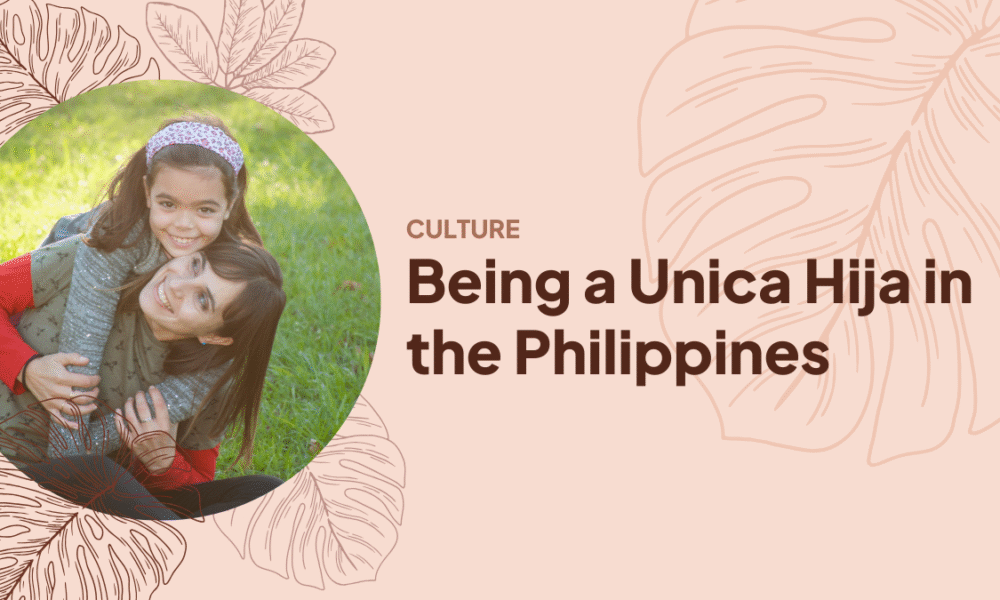
I spent most of my childhood as a unica hija believing I was lucky.
As the only daughter in a Filipino household, I had my own room. My own things. Undivided attention from parents who poured everything they had into raising me. No sibling rivalries, no hand-me-downs, no fighting over who got the last piece of chicken at dinner.
But somewhere between childhood and adulthood, I realized that being an only daughter wasn’t just about privilege. It was about carrying the full weight of parental hopes, fears, and dreams on shoulders that were never meant to bear that load alone.
The Double-Edged Sword of Being a Unica Hija
Filipino culture places enormous value on family bonds. Research from Metro Manila shows that both mothers’ and fathers’ cultural values significantly predict higher expectations for family duties. When you’re the only child, those expectations don’t get divided. They concentrate.
You become the sole recipient of everything: the love, the resources, the pressure, the disappointment.
Here’s what people don’t tell you about being an only daughter in the Philippines. When poor Filipino families can only afford to send one child to school, it’s often the girl who receives this opportunity. The reasoning? Girls will continue to live close to or with their parents, even after marriage, providing ongoing support. Boys are expected to build their own families.
This creates a unique dynamic where daughters become long-term family investments. The concept of “tagapagtaguyod na anak” (breadwinner child) reveals that children provide not just financial support but also emotional and social support, shaped by parental expectations, the child’s sense of responsibility, and “utang na loob” (debt of gratitude).
When you’re the only daughter, you carry all of this alone.
The Overprotection Problem Nobody Talks About
My family loved me fiercely. They still do.
But that love manifested as a protective bubble that became harder to breathe inside as I grew older. Every friendship required interrogation. Every outing came with a curfew that felt more appropriate for a middle schooler than a college student. Every decision I wanted to make independently was met with concern, caution, and often, resistance.
I thought I was the problem. I thought I was ungrateful.
Then I learned that children with overprotective parents are likely to have poor coping skills and higher levels of stress, anxiety, and depression. They grow up to become adults who are usually dissatisfied with life and have unrealistic expectations from people around them.
The research hit me like a diagnosis I didn’t know I needed.
Overprotection doesn’t just limit your ability to take risks. It diminishes your self-efficacy and coping behaviors. Longitudinal studies show that adolescents who perceived their parents as overprotective experienced higher levels of internalizing problems. The impact on social functioning is particularly notable because overprotective parents limit their child’s autonomy by forbidding them to do things that peers are allowed to do.
I watched my friends navigate public transportation while I waited for my parents to pick me up. I saw them make mistakes, learn from them, and grow stronger. Meanwhile, I was being protected from the very experiences that would have taught me resilience.
The Social Cost of Safety for the Unica Hija
Adult children from overprotective households have low self-esteem and self-worth. They may lack the resilience and confidence that are essential to face the world. The consequences include:
- Dependency issues that persist into adulthood
- Anxiety about making independent decisions
- Difficulty with risk-taking, even calculated risks
- Challenges forming healthy adult relationships
Overprotectiveness reinforces avoidance and restricts opportunities to socialize and individuate, leading to increased vulnerability for psychological disorders, particularly anxiety. This excessive focus on avoiding harm limits opportunities for development of healthy independence and psychosocial skills. For individuals dealing with adult ADHD, this overprotection can be especially challenging, as they already face difficulties with executive function and may need more, not fewer, opportunities to practice independence.
I felt this acutely in my twenties. While my peers were building careers in different cities, traveling, making bold moves, I was still navigating the delicate balance between honoring my parents’ concerns and claiming my own life.
The Burden of Being the Emotional Center
Eldest daughters in Filipino families face unique social and family pressures. They take on more domestic responsibilities than younger or male counterparts, often acting as co-parents and providing both financial and emotional support.
As the only daughter, I wasn’t the eldest daughter. I was the only daughter. The pressure multiplied.
Many eldest daughters report feeling that “they keep rejecting the idea that I’m tired,” highlighting the emotional suppression stemming from the Filipino value of utang na loob. The cultural expectation to maintain harmony within Filipino families often silences daughters’ frustrations. While these values foster family cohesion, aspects of toxic Filipino culture can emerge when expectations become so rigid that they suppress individual emotional needs and personal growth.
Common refrains include:
- “I pressure myself to be perfect”
- “I feel like I’m not allowed to be angry”
- “I put my family’s needs above my own”
The eldest daughter is often more than just a sibling. She’s a second parent, a role model, and the emotional glue that holds the family together.
When you’re the only daughter, you become all of these things without the buffer of siblings to share the load. Every family conflict involves you. Every parental disappointment lands on you. Every success is celebrated, but every failure feels catastrophic because there’s no one else to redirect attention to.
The Independence Paradox
Research across ages and settings shows that autonomy represents a potent blend of strong internal motivation, personal freedom to be oneself, knowing that authentic self, and acting with a fundamental sense of responsibility toward others.
Children with more autonomy consistently report higher self-esteem, greater self-actualization, and stronger personality integration.
But how do you develop autonomy when your parents’ entire world revolves around you?
A recent study in the Journal of Pediatrics made headlines with evidence showing a link between lower independence in today’s children and rising mental health problems. An October survey from Mott Children’s Hospital reveals that parents think they give their children more independence than they do.
Statistics reveal that 62% of parents report they can be “sometimes” overprotective, with mothers more likely to report being overprotective than fathers. About half of parents believe they should be more involved in their child’s life.
When you’re a unica hija, that percentage feels more like 100%.
Breaking Free Without Breaking Bonds as a Unica Hija
The challenge isn’t rejecting your parents’ love. The challenge is learning to accept their love while still claiming your right to make your own mistakes.
This means:
- Having honest conversations about boundaries. I had to tell my parents that their protection was starting to hurt me. That conversation was one of the hardest things I’ve ever done. But it opened a door to a more adult relationship.
- Taking calculated risks despite their fear. I moved to a different city for work. I traveled alone. I made career decisions they didn’t initially understand. Each step felt like a small rebellion, but it was necessary growth.
- Recognizing that their overprotection comes from love, not control. Filipino American families express more traditional aspects of familism than many other cultures. Filipino parents are more likely to reinforce traditional familism beliefs and behaviors among their children. Understanding this context helped me respond with compassion instead of resentment.
- Building a support system outside the family. Friendships became essential. They provided perspective, validation, and the social experiences I had been protected from.
The Research on Only Children Gets It Wrong
Research from the University of Texas shows that only children often surpass first-born counterparts in character and exhibit stronger bonds with their parents.
That sounds positive until you realize that these strong parent-child bonds can also create a dependency that makes the transition to independence more challenging.
However, contrary to popular belief, one study found that parents of only children were more likely to minimize their children’s symptoms than were parents of children with at least one sibling. Parental protectiveness did not differ as a function of only child status. These findings are somewhat discrepant with commonly held beliefs about parents’ patterns of responding to only children.
The reality is more nuanced than stereotypes suggest.
Being a unica hija in Filipino culture adds layers that general “only child” research doesn’t capture. The cultural context of collectivistic values, conformity expectations, and familial obligations creates a unique experience that deserves recognition.
What I Wish Someone Had Told Me
Your parents’ fear doesn’t have to become your cage.
You can honor your family while still building your own life. These aren’t mutually exclusive goals, even though they sometimes feel that way.
The guilt you feel about wanting independence is normal. It’s a byproduct of being raised in a culture that values family above individual desires. But feeling guilty doesn’t mean you’re doing something wrong.
You’re allowed to be tired. You’re allowed to be angry. You’re allowed to prioritize your own needs without it being a betrayal of your family’s love.
The transition to independence will be uncomfortable for everyone involved. Your parents will worry. You’ll feel guilty. There will be difficult conversations and hurt feelings. But on the other side of that discomfort is a healthier, more sustainable relationship built on mutual respect rather than dependence.
Moving Forward
I’m still navigating this balance. Some days are easier than others.
My parents still worry more than I’d like. I still feel the pull of guilt when I make decisions they don’t immediately understand. But I’ve learned that growth happens in the space between comfort and fear.
Being an only daughter shaped me in ways both beautiful and challenging. It taught me the depth of parental love and the weight of expectations. It showed me how protection can become limitation and how love can sometimes need boundaries to breathe.
If you’re reading this, know that your experience is valid. The pressure you feel is real. The struggle for independence doesn’t make you ungrateful. The desire to build your own life while maintaining family bonds doesn’t make you selfish.
It makes you human.
And maybe, just maybe, it makes you exactly the person your parents hoped you’d become: someone strong enough to honor where you came from while brave enough to choose where you’re going.
Frequently Asked Questions
What does unica hija mean?
Unica hija is a Spanish-Filipino term meaning “only daughter,” referring to a girl who grows up without sisters or brothers in the household.
Is being an only child harder in Filipino culture?
Yes, Filipino culture’s emphasis on family obligations and collectivistic values means only children often carry concentrated expectations and responsibilities without siblings to share the burden.
How can I set boundaries with overprotective Filipino parents?
Start with honest, compassionate conversations acknowledging their love while expressing how their protection affects you, then gradually take calculated risks to demonstrate your capability.
What is the difference between a unica hija and an eldest daughter?
While both face significant family responsibilities, a unica hija carries all parental expectations alone without siblings to share duties, redirect attention, or provide emotional support.
Can overprotective parenting cause anxiety in adults?
Yes, research shows that overprotective parenting is linked to higher levels of anxiety, depression, poor coping skills, and difficulty with independence in adulthood.

Maria is an accomplished digital marketing professional, specializing in content marketing and SEO. She's a neurodivergent who strives to raise awareness, and overcome the stigma that envelopes around mental health.